

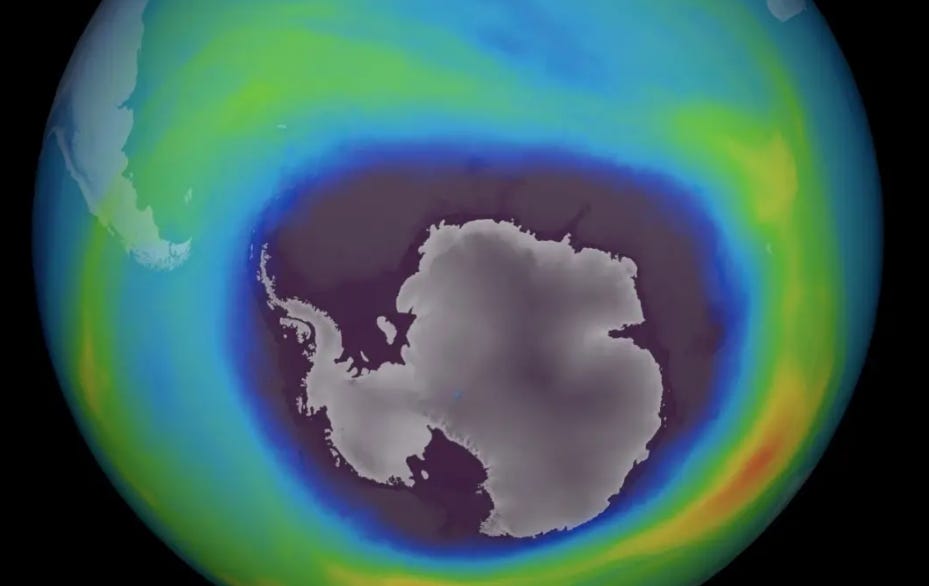
In December 2000, the Independent reported that the seasonal hole in the ozone layer over Antarctica would begin to shrink and should “close completely within 50 years” because of a worldwide ban of chlorofluorocarbons (CFCs). This was a common view at the time, and the CFCs hullabaloo has provided a template for many other agitprop campaigns driving the Net Zero fantasy. But you hear less about this seminal CFC campaign these days – its fearmongering work is done, and the Nobel prizes are safely secured. For its part, the ozone hole – actually a thinning in the upper atmosphere – is as large as ever. This year, the hole was particularly massive, ranking the seventh largest in 48 years of detailed satellite records.
Surely this scare was not based on cherry-picked data to suggest major human involvement? Perish the thought that the holes are in fact largely caused by mostly natural forces at work in the south polar atmosphere. It is enough to make even the mildly cynical suspicious of all those other climate scares: coral all gone in 25 years, ditto Arctic summer sea ice, not to mention humans causing fireball Earth by a mild improvement of current denuded levels of the trace gas and plant food carbon dioxide.
This year saw an unusually strong polar vortex develop over Antarctica, and this kept the stratosphere extremely cold. The cold conditions encouraged the formation of polar stratospheric clouds which helped natural chlorine and bromine destroy some of the ozone for longer. The 1987 Montreal Protocol was an international agreement to phase out CFCs and by 1995 their release into the atmosphere had almost stopped.

The revered fright even has a special UN ‘World Ozone Day’ celebrated every year on September 16th. This is said to recognise the success of “landmark agreements in helping restore the protective layer around the Earth”. In 2020, the Secretary-General António Guterres claimed the world should be encouraged by “inspiring examples” of political will and apply the same will to healing the planet.

