

The Energy Trap: Why the Renewable Energy Transition Can’t Work – and What Can by Richard Lyon (Swift Press, 2026)
Richard Lyon’s The Energy Trap is a short book with large ambitions: to strip the energy debate back to first principles and make the key policy issues accessible to the intelligent reader. He describes it as “a friendly guide that gives you the minimum set of facts you need, with references so you can check the claims yourself. … You’re perfectly capable of understanding what’s happening if someone takes the trouble to explain it clearly.” The result, as he says in his prologue, can be read in “three cups of tea and half a packet of biscuits”.
The author combines training in electrical engineering, petroleum engineering and energy economics with more than 25 years in senior upstream oil and gas roles in the UK, Norway, Azerbaijan, Congo and Cameroon. Having spent much of my own career in the industry at the downstream end, in corporate planning where the outlook for demand, supply and prices is the bread and butter of the analyst, I read the book with great interest. What insights could an upstream engineer and energy economist who worked on resource assessment, field development and extraction decisions – working at the ‘coal face’ of the supply side, so to speak – bring to corporate planning?
Physics, depletion and escaping the energy trap
The book argues its case in three broad strands, spread across seven short parts in 110 pages of main text. First comes the physics of energy. “If a policy or a technology cannot satisfy the non-negotiable laws that govern how energy is captured, converted, stored and dissipated, it does not matter how elegant the spreadsheet or how passionate the advocacy: it will fail.” Useful work depends not just on the quantity of energy available but on its quality – what Lyon calls the energy gradient, energy density and areal power density – together with the distinction between a fuel and an energy carrier. On these grounds wind and solar – being diffuse and intermittent – cannot substitute for hydrocarbons at industrial scale. The first part of the book’s subtitle, “why the renewable energy transition can’t work”, is explained as the paradox of renewable energy “in which we discover that renewables aren’t renewable, and that building the replacement for fossil fuels requires more fossil fuel than it saves”.
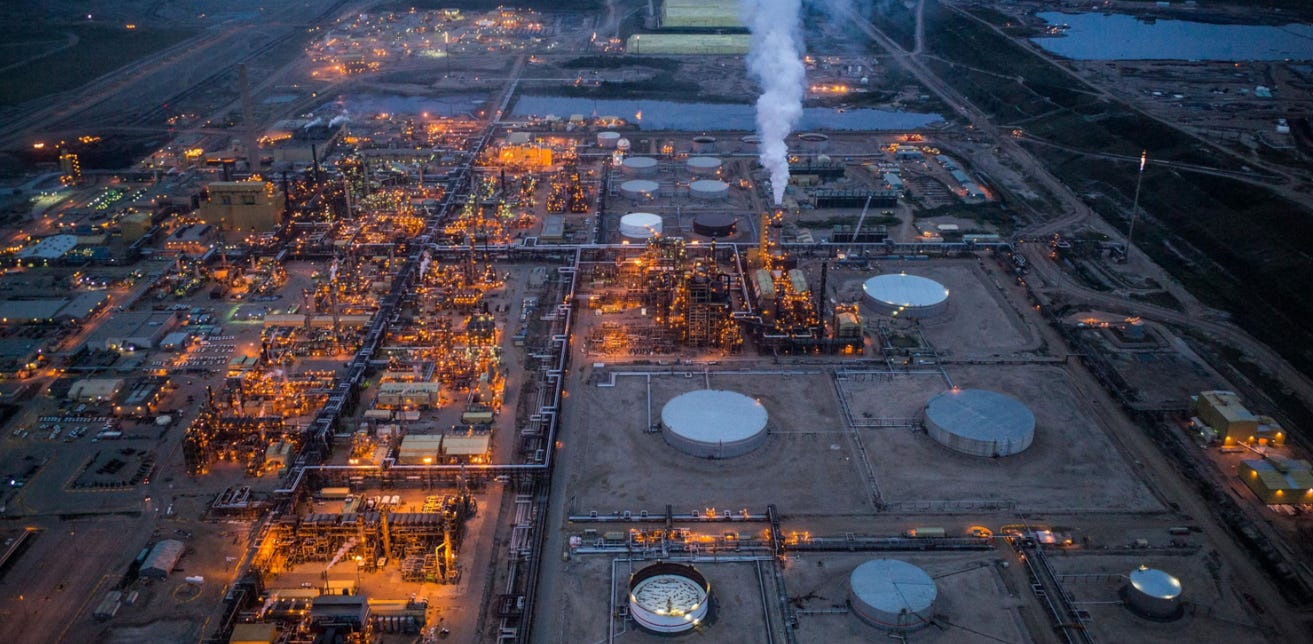
The second part of the argument deals with depletion. Lyon argues that “not all oil is equal” – “the fact that the ‘peak oil was wrong’ narrative has never understood”. Fossil fuels are the “depleting inheritance that no energy policy acknowledges”. According to Lyon, conventional oil has already passed its peak on the curve first described by Hubbert. “Economic oil – the cheap conventional oil that built the modern world – peaked around 2006.” He contrasts Saudi conventional crude, which he estimates costs about $10 a barrel to extract, with more expensive US shale, where new wells need over $60 a barrel to break even. Lyon estimates existing Canadian oil sands operations break even at roughly $30-$40 a barrel. The massive increase in unconventional oil driven primarily by the US shale revolution – which kept global oil production growing – was, in Lyon’s words, made possible because “cheap capital changed the arithmetic. With borrowing costs near zero, companies could drill at a loss and refinance indefinitely.” In his Daily Sceptic interview, Lyon says: “It was having vast amounts of cheap imaginary money thrown at it. … But it is not real oil, it’s uneconomic oil. It’s oil fuelled by imaginary money.”

