

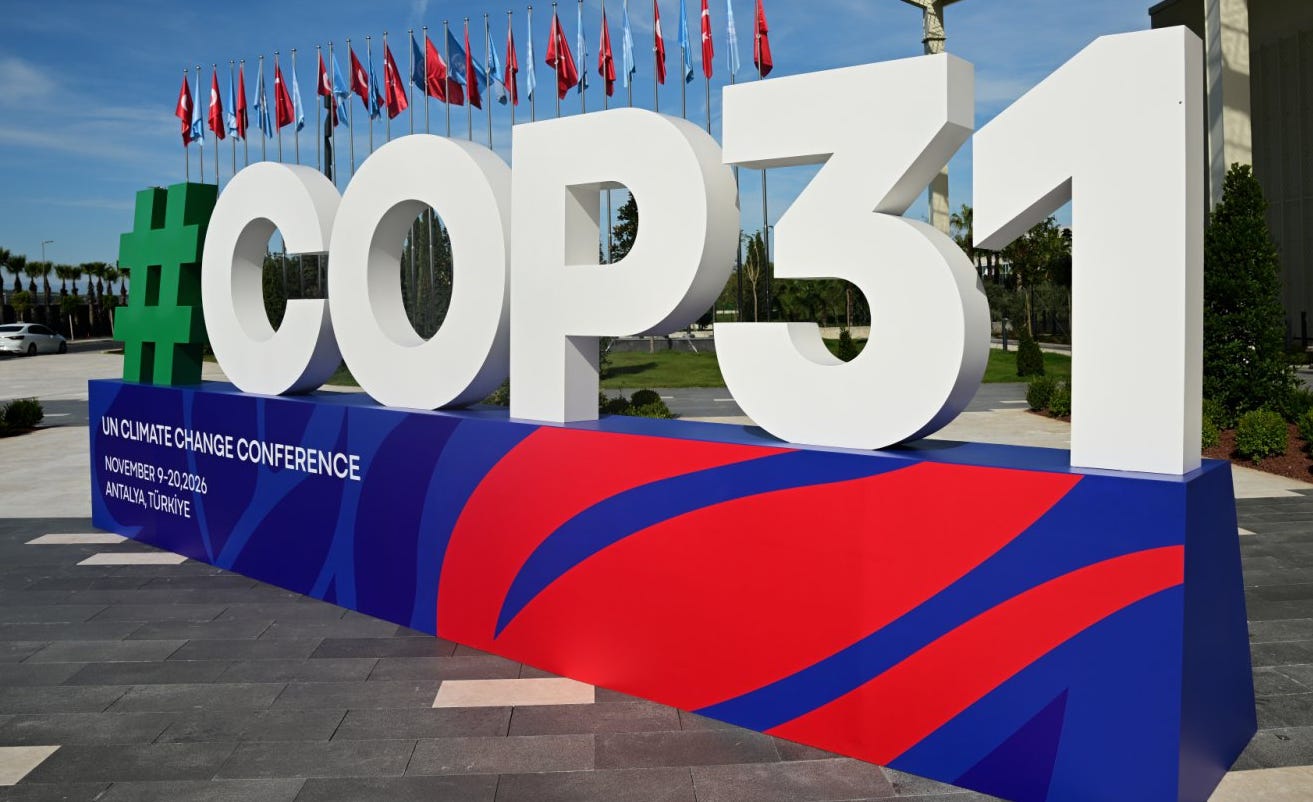
Another year has passed, another ‘Conference of the Parties’ (COP) to the United Nations Framework Convention on Climate Change (UNFCCC) will convene. Next Monday the travelling circus pitches its tent again, this time in the Turkish Mediterranean resort of Antalya, for COP31, which runs from November 9th to the 20th. Some 100,000 participants are expected. Apart from the usual grand-sounding communiqués, more breast-beating by the climate NGOs and alarmist headlines by the legacy media, nothing much of practical significance will come out of COP31 in Turkey.
After a bruising contest between rival bidders, Turkey won the right to host while Australia’s Climate and Energy Minister, Chris Bowen, was handed the gavel as “President of Negotiations”. One country hosts, another negotiates, and the Pacific islands, with Australia’s help, got a pre-COP of their own. The World Resources Institute’s David Waskow has summed up the defining context of the summit as “heat and Hormuz“, referring to this year’s blistering summer in Europe which supposedly proved that climate crisis is upon us, and to Iran’s blockade of the Strait of Hormuz, which cut off a significant share of the world’s oil and gas supplies and sent prices soaring.
The Hormuz effect
The climate Establishment has spent months arguing that both Europe’s hot summer and the Hormuz supply shock prove its case. Call it the Hormuz effect: first Ukraine, now Iran – every war in an oil- or gas-producing region exposes our dependence on what Ed Miliband, the UK’s previous energy secretary and now Foreign Minister, called “petrostates and dictators”. The only answer, claims Miliband and fellow climate ideologues in the EU, is “home-grown renewables” that no despot can switch off. UN climate chief Simon Stiell says fossil fuel dependency is “ripping away national security and sovereignty“. At the Petersberg Climate Dialogue in Berlin in April, ministers sensed an opportunity to recast wind and solar as guarantors of energy security, and Britain’s climate minister, Katie White, called the transition “even more imperative“.
It is a curious reading of events. A country at the mercy of imported hydrocarbons might conclude that it should produce more of its own, as Washington has done, rather than double down on intermittent power that needs gas-fired backup on every windless winter evening. Nor is swapping dependence on Gulf oil for dependence on Chinese panels and minerals an obvious gain in sovereignty.

