

Barclays PLC dropped a bombshell white paper last week titled ‘Transition Realism: A Stranded Asset Perspective on the Energy Transition’. The report pulls no punches in flipping the script on the climate establishment’s favourite bogeyman. For years, we’ve been lectured that fossil fuels are the quintessential stranded assets — trillions in oil, gas and coal reserves doomed to remain unused underground as the world races to Net Zero. The term “stranded assets” – investments that suffer unanticipated or premature write-downs, devaluations or conversion to liabilities – became a fixture of climate-policy discourse.
Yet, as the Barclays analysts point out, the real risks now lurk in the renewable sector. “Stranded-asset risk is becoming system wide,” the paper warns. “Historically, stranding meant coal plants. Today, renewables facing multi-year interconnection queues, curtailment and congestion risks are increasingly likely to be impaired.”
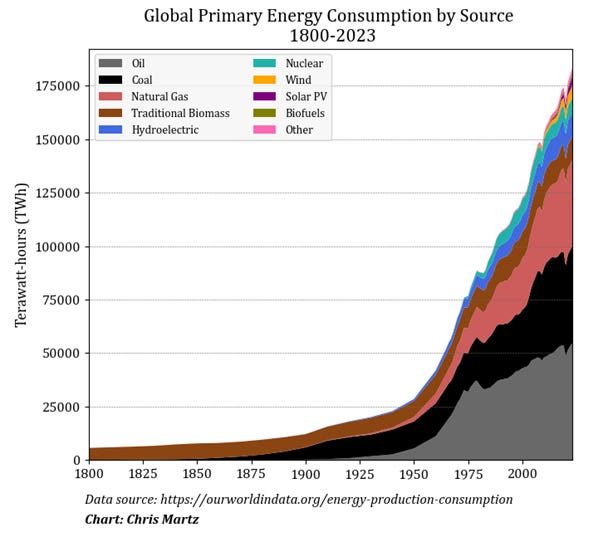
In an era of geopolitical upheaval, energy insecurity, persistent inflation and AI’s insatiable power hunger, renewables — once the darlings of ESG portfolios — are emerging as the new buggy whips in an age of automobiles. The Barclays paper couldn’t be more timely. It argues – nothing original about this observation – that energy transitions are “additive, not substitutive” with new sources like wind and solar stacking atop fossil fuels rather than displacing them, as global primary energy consumption hits record highs.
The Barclays study revamps the old ‘energy trilemma’ into a stark hierarchy: security of supply trumps affordability, which in turn overshadows sustainability when push comes to shove — as seen in Europe’s frantic coal restarts following Russia’s invasion of Ukraine. Grid constraints emerge as the “hidden barrier”, with US grid capacity expanding at a glacial pace of 3% over the past decade, leaving renewables unable to integrate and at risk of obsolescence.

