

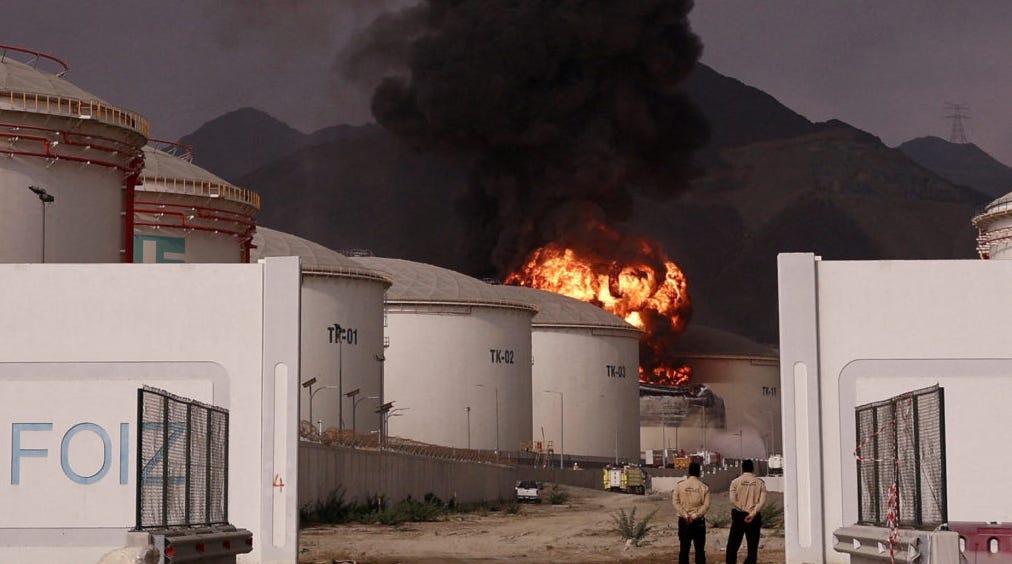
The US-Israel war in Iran has once again shaken energy markets and, if it is not brought under control in the next days and weeks, has the potential to become another global energy shock. With gas and oil prices spiking, weaknesses in arguments for and against the government’s green energy agenda have been exposed.
“Government is about choices,” claimed Secretary of State for Energy Security and Net Zero Ed Miliband, ahead of the war’s opening salvoes. The “choice” he claims to have made is the transfer of £150 from energy bills to general taxation. Labour’s election promise to “lower bills” has embarrassed the party, though Miliband and his plans remains in place. The accounting-trick policy may, short-term, bring “much needed cost of living support for families”, as Miliband claims. But it means more pressure on other taxpayers, as will the “historic investments in clean, homegrown power we control” that Miliband boasted about at the same time. But notice that the “control” and “choices” are limited to merely redistributing cost rather than reducing it. “Those on the Right want to outsource our energy security to fossil fuel markets we have no control over,” Miliband claims. So, do the chaotic price signals unleased by the war make his case?
In early January, gas prices on European markets hit a low of around 70p per therm. As American naval and air forces gathered in the region, and Iran’s military exercises required a closure of the Strait of Hormuz, prices briefly spiked at 110p per therm before returning to their 70p low. In the days following the strikes and again the Strait’s more forceful closure, prices hit 170p before settling somewhat at 130p per therm. It is estimated that approximately a fifth of the world’s oil moves through this narrow passage under Iran’s control on its way from the region’s oil rich counties. Subsequently, Iran has permitted Chinese warships to escort tankers carrying energy destined for China, but cargos destined for Europe are still blocked. Qatar has announced that it will be unable to fulfil contracts. And Putin has hinted that Russia could bring Europe’s planned assertion of ‘energy independence’ – the prohibition of imports from Russia – sooner than the European Union had planned for “late 2027”.
Things could get very difficult for European energy users in the months ahead. It’s not just oil and gas on those stranded ships – it’s things that Britain can no longer make for itself, such as fertiliser. And this would seem to make Miliband’s case. On Tuesday, Business Secretary, Peter Kyle, is reported by the Telegraph to have said in response to the crisis, “Doubling down on renewables is, yes, right for climate change, it’s, yes, right for jobs. It is also essential because we keep on seeing these lived examples of how instability, through regional instability, is creeping into our energy prices, for which the British Government has no agency.”

