

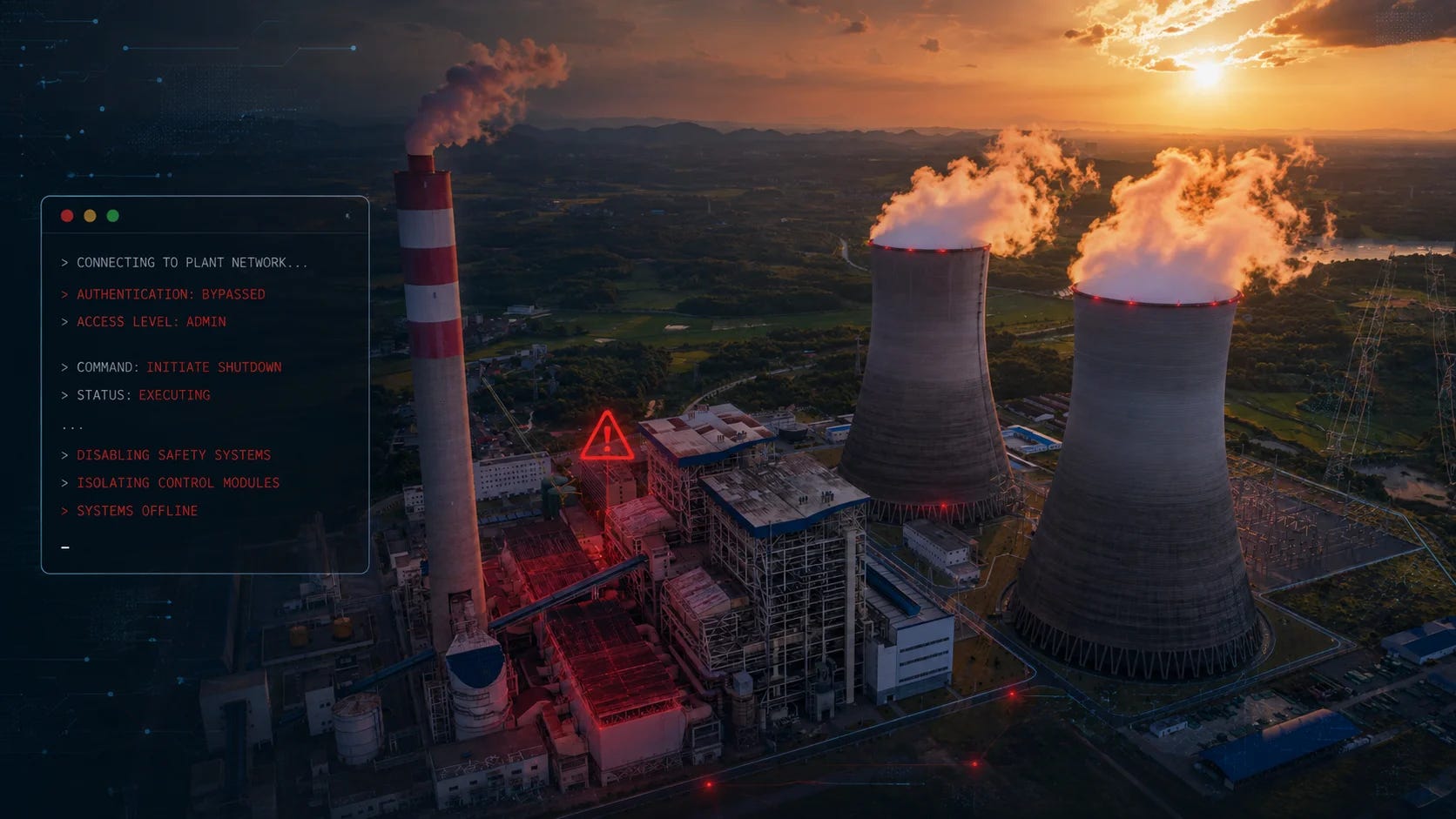
According to the Telegraph, a hacker or hackers unknown, but probably of Iranian identity, recently hacked a generator of some unspecified type, likely in retaliation for Britain’s role in supporting US and Israeli forces. Well, maybe, maybe not. The only way the identities of those responsible can be known is if they identified themselves. Fortunately, the group most responsible for undermining Britain’s electricity capacity is very easy to identify for that reason. They are very proud of themselves.
It is not known which generator was targeted by the suspected hackers, nor how big it is. All that is said by the Telegraph is that the target was small, and the attack made no difference to the security of the grid’s supply. Yet the story made the paper’s front page, along with stories about Russian, Chinese and North Korean hacking teams, which make daily assaults on our infrastructure, that are fought off by security services – namely and mostly the National Cyber Security Centre, a branch of GCHQ.
One problem with such claims is that little of the truth of this stuff can be established. The cyber war is foggier than any conventional conflict. There are of course hackers, and most of them are indeed malicious (the alternative being ‘ethical hackers’, who probe cybersecurity measures for weaknesses in order to develop better defences). Bad actors might just as likely have assumed traceable identities as unwittingly leave clues exposed for analysts to discover. The origin of attackers and their motivations are just speculation, and we have little hope of reliable, independent information.
This means also that we cannot know what the tit-for-tat nature of these battles might be. For example, it is widely understood that US and Israeli teams developed a virus, known as Stuxnet, in order to cause a catastrophic malfunction of Iranian uranium processing plants. Preventing nuclear proliferation might arguably be a good use of the techniques of cyber warfare. But it must come with the acknowledgement that it opens up new fronts, escalates the tit-for-tat and exists within a historical context that Western commentators are reluctant to explore beyond 1979, to perhaps understand Iranian hostility to Britain and America.

