

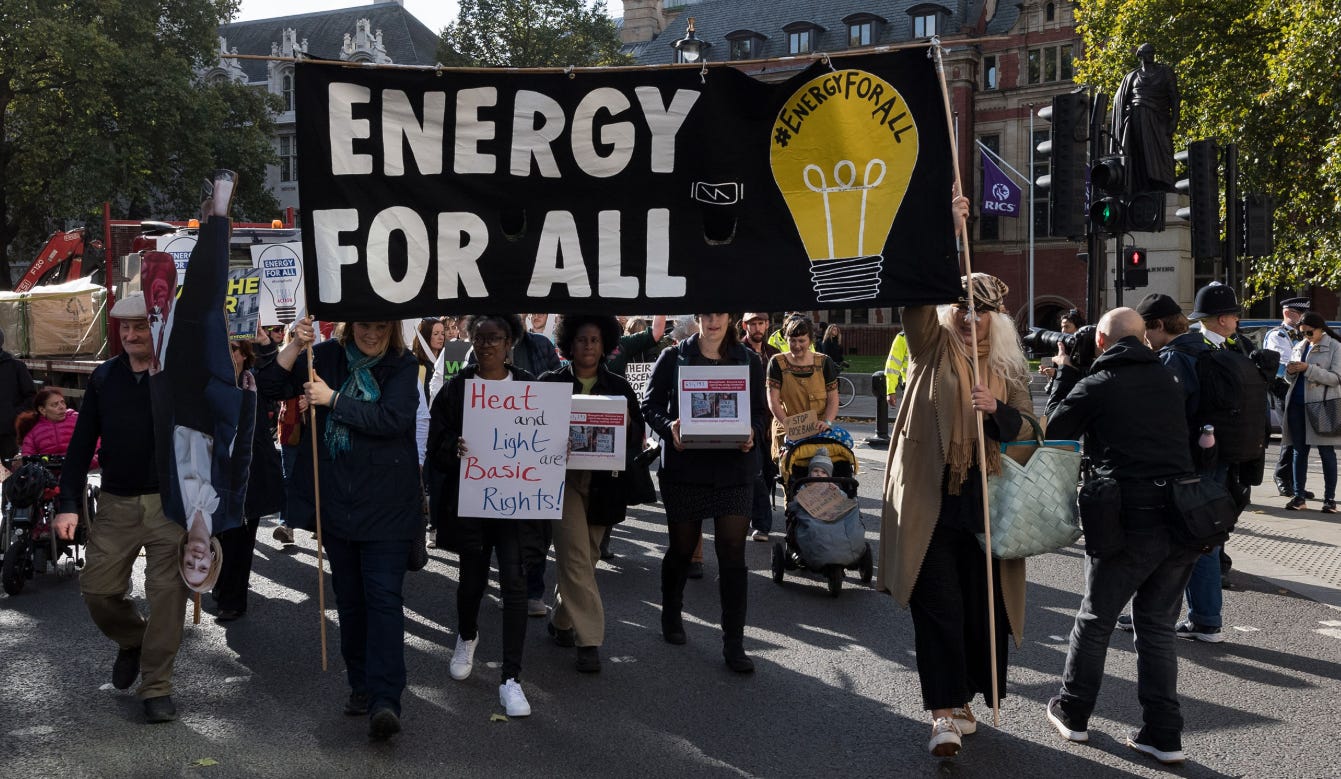
I have been writing recently about the putative ‘links’ between climate change and health impacts. It has long been argued that this relationship can be detected, even though science has yet to identify a ‘fingerprint’ in data pertaining to higher temperatures and, say, floods or declines in agricultural productivity. Meanwhile, analysis was produced this week in a report by the Health Foundation that shows a growing health problem caused by “fuel poverty”.
According to the Health Foundation:
Areas at the highest risk of fuel poverty have 18% higher rates of hospital admissions with respiratory diagnoses compared with areas at the lowest risk, as well as higher rates of emergency care use, cardiovascular-related hospital admissions and poor mental health.
I have always found the term ‘fuel poverty’ (sometimes called ‘energy poverty’) euphemistic, bureaucratic and misleading. We don’t talk about ‘shoe poverty’ or ‘food poverty’, nor even ‘holiday poverty’. It is presented as a phenomenon that is distinct from its causes. And that allows those who cause the problem to present themselves as its solution.
The problem with the framing of any issue as subordinate to climate is one I’ve remarked on for as long as the climate camp has claimed that ‘climate change is worse for the poor’. Well, yes, if we work within the assumption that climate change has negative outcomes, then of course it is. Everything is worse for the poor. And even if you tackled climate change, you’d still be left with the problem that there are still poor people – and likely vastly more of them in the wake of Net Zero. On the green perspective, poverty is a given – a natural state of existence, often celebrated as ‘authentic’ and ‘sustainable’ by wealthy Westerners, whereas the weather is within our control.

