

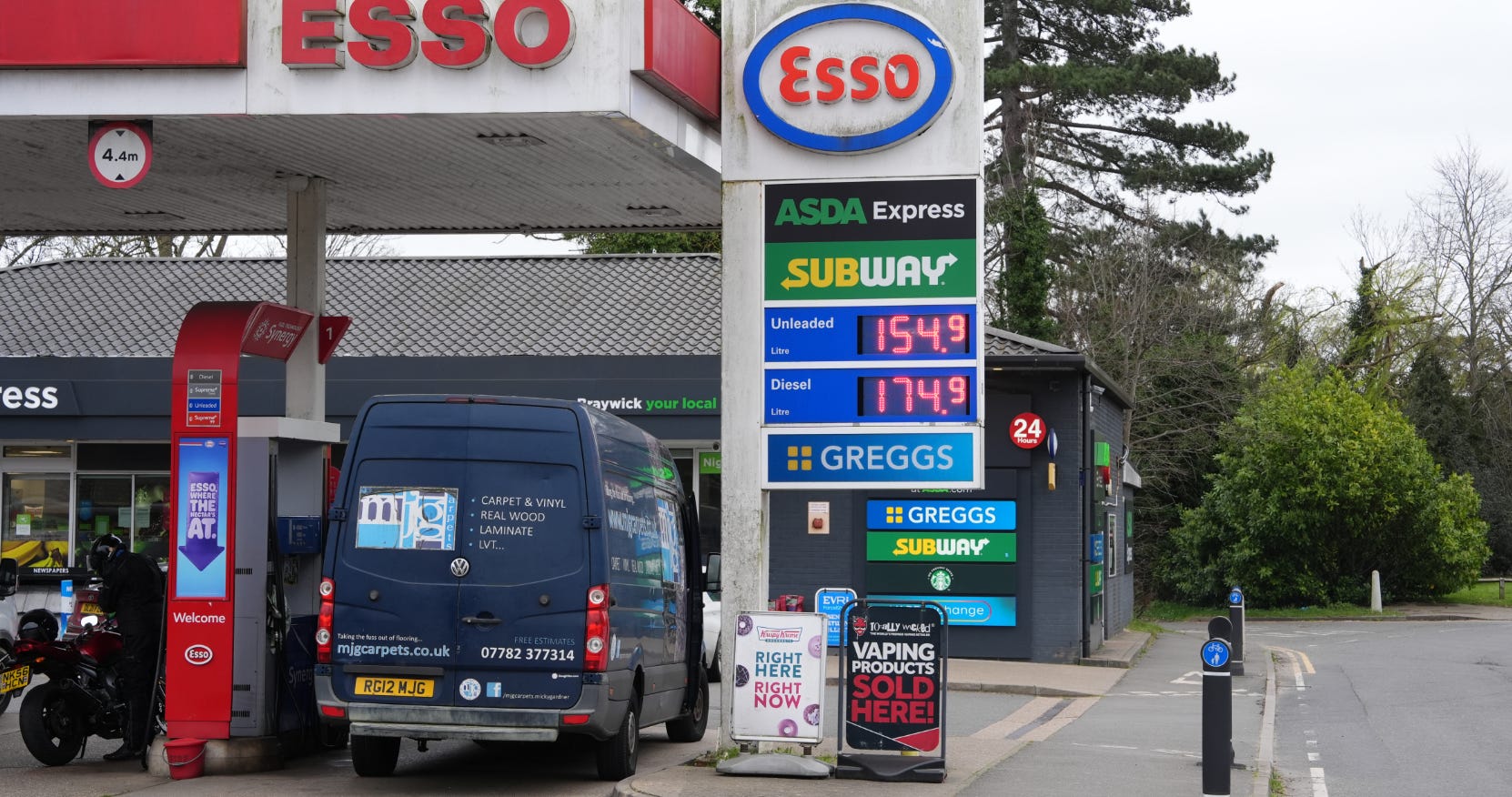
When petrol prices rocket because of supply shocks — such as the closure of the Strait of Hormuz and the rerouting of oil tankers — one might have expected a discussion of geopolitics, market signals and the obvious supply-side remedies. Of which there has been plenty, some competent and even masterly, some not so competent analyses by ‘instant expert’ talking heads in social and mass media. But a recent article by an economist in the Conversation offered a solution so perversely tone-deaf it could have been lifted from a Babylon Bee satirical script.
Citing research that a 10% rise in UK petrol prices can cut demand by up to 5%, the piece solemnly declared that “high prices are a way of adjusting consumption to cope with the lower supply”. The subtext was unmistakable: with refined products suddenly scarcer, the proper response is not to produce more fuel (where the country is blessed with domestic fossil fuel resources, like the UK) or to import more from sources outside the Strait of Hormuz or both. Instead, the advice from Christoph Siemroth, Senior Lecturer in Economics at the University of Essex, is to make what little remains even costlier — so that the hoi polloi drive less, take the bus and hasten the glorious transition to Net Zero.
Clueless and insidious
One is reminded of Marie Antoinette’s famous cake remark, betraying aristocratic cluelessness. But the Conversation article is something far more insidious: the capture of economics itself by the green ideology that now rules our institutions from the BBC to the Treasury, from Oxbridge common rooms to the UK Met Office service. The discipline that once stood as the last redoubt against the Frankfurt School’s long march through the social sciences has fallen. Frank Knight, Gary Becker, George Stigler, Milton Friedman et al. held the gates against postmodern gibberish for a generation. No longer. The barbarians are inside the citadel, wearing lanyards from the oxymoronically named Department for Energy Security and Net Zero, chanting ‘sustainability’ like a secular rosary.
Consider the elementary logic that every first-year economics student once absorbed before the PPE types at Oxford and Cambridge began their higher education in Gaia worship. When the price of a good rises because of scarcity — whether from a blockade in the Persian Gulf or an OPEC production cut — the signal is unambiguous: produce more, explore more, innovate more. Britain sits atop some of the richest hydrocarbon resources in Europe. North Sea oil and gas reserves are not physically exhausted; they are made economically infeasible in the face of Miliband’s punitive tax rates.

