

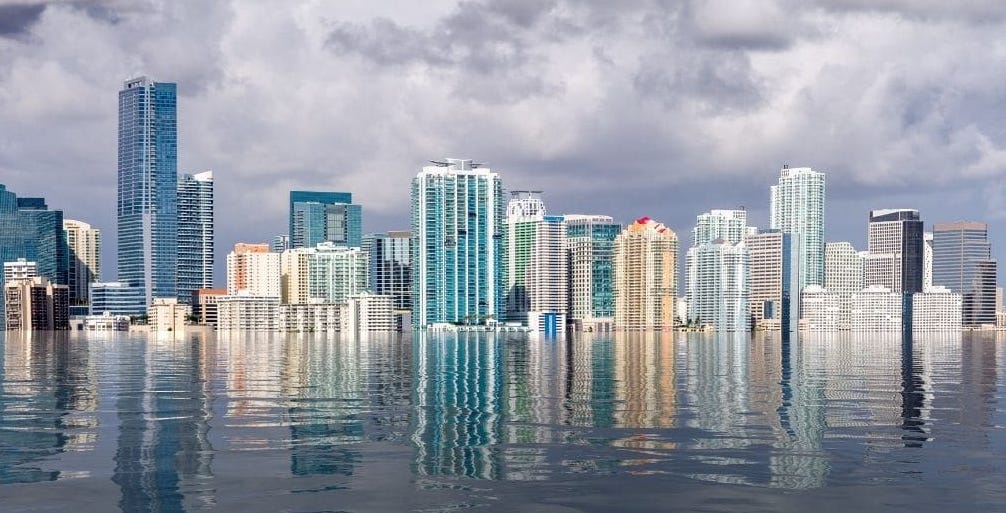
The Daily Mail is still promoting the perennial sea level scare story. In its latest article, it writes:
Global sea levels could rise as much as 1.2 metres (four feet) by 2300 even if we meet the 2015 Paris climate goals, scientists have warned.
The long-term change will be driven by a thaw of ice from Greenland to Antarctica that is set to re-draw global coastlines.
Sea level rise threatens cities from Shanghai to London, to low-lying swathes of Florida or Bangladesh, and to entire nations such as the Maldives.
It is vital that we curb emissions as soon as possible to avoid an even greater rise, a German-led team of researchers said in a new report.
By 2300, the report projected that sea levels would gain by 0.7-1.2 metres, even if almost 200 nations fully meet goals under the 2015 Paris Agreement.
Targets set by the accords include cutting greenhouse gas emissions to net zero in the second half of this century.
Ocean levels will rise inexorably because heat-trapping industrial gases already emitted will linger in the atmosphere, melting more ice, it said.
In addition, water naturally expands as it warms above four degrees Celsius (39.2°F).
Every five years of delay beyond 2020 in peaking global emissions would mean an extra eight inches (20 centimetres) of sea level rise by 2300.
None of the nearly 200 governments to sign the Paris Accords are on track to meet its pledges.
We have grown used to these silly scare stories over the years.
As long ago as 1957, the notable physicist Dr Joseph Kaplan was warning that the oceans would rise by 40 feet in the “next 50 or 60 years”.
Later, in 1983, the US Environmental Protection Agency reported that seas could rise as much as 11 feet by the end of the next century.
The UN’s director of the UN Environment Programme went one better, claiming in 1989 that entire nations could be wiped off the face of the Earth by rising sea levels if the global warming trend is not reversed by 2000.

