

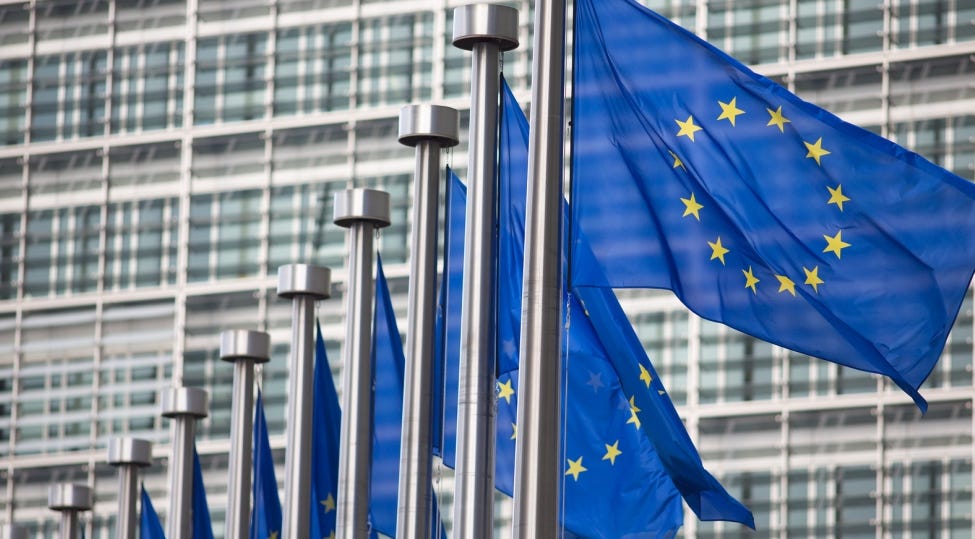
Launched at the COP30 meeting in Brazil last year, the Declaration on Information Integrity on Climate Change (DIICC) was, as reported here, a manifesto for censorship wrapped in venal doublespeak. Fittingly, given the corrupt and exhaustive process that spawned it, the DIICC was last week ‘endorsed’ by the European Union. According to a European Commission press release from the Directorate-General for Climate Action, the EU Council gave its approval to the UNESCO initiative on January 20th and the EU formally accepted it a week later.
The DIICC “establishes shared international commitments to address information integrity on climate change and promote accurate, evidence-based information on climate issues”, explains the press release. But it came just ahead of France’s X headquarters being raided by police and Spain’s Pedro Sánchez launching a “coalition of the digitally willing” aimed at regulating social media, using child protection as a very obvious pretext. With similar moves to extend the Online Safety Act being considered by the UK Government, it would seem that the “coalition” is one of chaotic and crisis-ridden governments and intergovernmental agencies running scared of democracy.
“This endorsement comes at a time when the information environment can be difficult to navigate, especially on climate matters,” the press release continues. Well, yes, indeed. And that’s very likely because the green agenda, at global, European and national levels has been built on two catastrophic lies: the ‘climate crisis’ and the claim that Net Zero can produce benefits such as ‘lower bills’ and energy security. Even if, as the declaration claims, “84% of Europeans agree that climate change is caused by human activity”, it does not follow either that they are right or that even if they are, that a ‘climate crisis’ is happening as a consequence or that disastrous energy policies will do more harm than good.
That much is obvious, of course, to our enlightened readers here, but it doesn’t occur to politicians, who believe that by using the law to narrow public conversation, the public will accept rank climate alarmism as a justification for deindustrialisation and economic hardship. The self-deception is more grotesque than the gaslighting: “The European Union is demonstrating its firm commitment to factual debate, climate science and evidence-based policymaking,” it boasts. But surely, if the EU can boast such a high percentage of people agree with its core agenda, seemingly based on polling, why the need for the DIICC? An alignment of 84% of the population with a government agenda is something about which usually only dictatorships can boast.

