

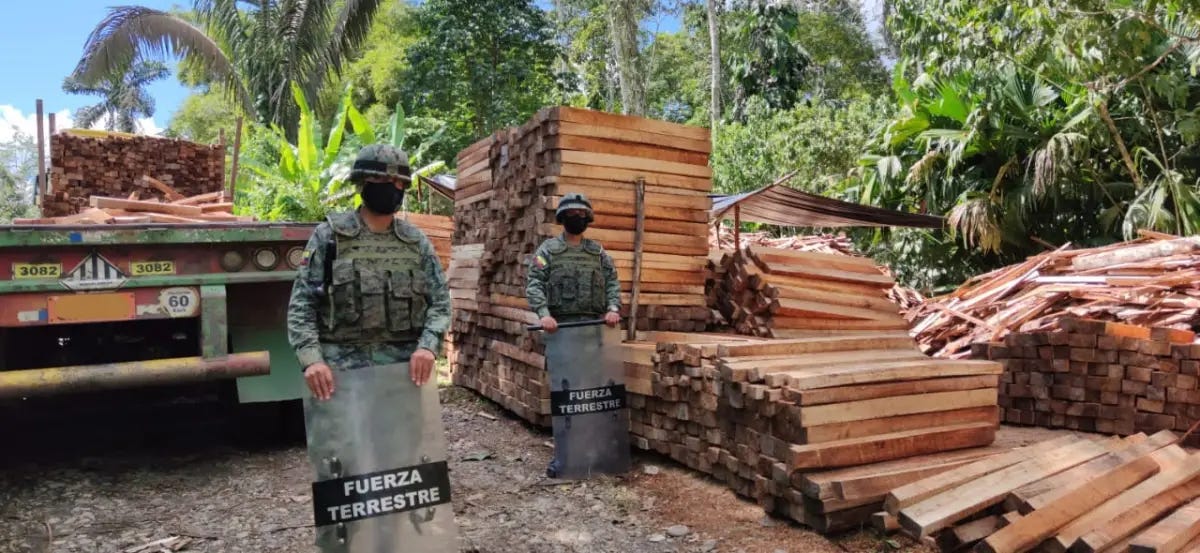
The rape of the Amazon rainforest to feed an exploding global demand for wind turbine balsa wood cores could be getting worse. According to local reports, the main balsa-producing country Ecuador has seen a huge 2025 rise in exports of the vital turbine core wood from US$218 million in 2024 to US$301 million. Last March, the Daily Sceptic reported exclusively on figures that suggested half a million mature balsa trees were being illegally logged every year in Ecuador and Peru to make up for shortfalls from sustainable plantations. The massive export rise over just one year hardly suggests the illegal deforestation is easing – if anything, it is a possible sign that the situation is getting worse.
Along with the global slaughter of millions of bats and the decimation of local raptor populations, the looting of the Amazon for balsa is one of the dirty secrets of the ‘green’ power revolution. For obvious political reasons, it cannot be mentioned in Net Zero-supporting mainstream media. Balsa is a tropical hardwood that is both lightweight and strong, and despite chemical foam alternatives, it is the material of choice for large 15 MW offshore turbine blades. According to a recent Mordor Intelligence report, foams can lose rigidity under extreme marine conditions – especially near the blade roots where stresses peak in structures that are almost as high as the Eiffel Tower.
Ecuador provides at least 70% of world balsa and China takes over half this supply as it attempts to dominate the global manufacture of wind turbines. It is thought that about 50% of global balsa production is used in turbine blades. Each blade is composed of 7% balsa, and it is estimated that each set of three can use up to 40 trees. Given what is known about annual balsa production, the scale of illegal logging and the requirements of turbine manufacturers, it is not difficult to arrive at a possible Amazon natural forest yearly loss of around half a million trees. The detailed figures can be found in our March article.
Balsa is a fast-growing wood that reaches the maturity needed for wind turbine use in about seven years. Until the soaring demand from turbines kicked in, it was harvested in sustainable plantations. But since the turn of the decade, this sustainable harvest cannot keep up with demand. In a damning 2024 survey, the Environment Investigation Agency (EIA) found that Ecuadorian exports were boosted by up to 50% following illegal logging in virgin rainforest.

