

In December 2023, the UK Health Security Agency (UKHSA) captured mainstream headlines with claims that massive increases in temperatures could lead to tropical mosquito-borne diseases sweeping the nation, endemic dengue fever in London by 2060, and a 12-fold increase in heat mortality within 50 years. All nonsense, of course – and the UKHSA report relied heavily on the notorious 2018 Met Office Climate Projections report (UKCP18). This Net Zero-promoting exercise ran only one set of assumptions through its supercomputer model and highlighted the findings in bold type. Those assumptions, always far-fetched, have now been declared “implausible” by the UN’s Intergovernmental Panel on Climate Change (IPCC).
The UKHSA report was entitled Health Effects of Climate Change in the UK: State of the Evidence 2,023 (HECC). It relied on UKCP18 and appears to have standardised its findings around RCP8.5. The Met Office work seems to have been responsible for all the HECC scenario assumptions, hazard frequencies, temperature trajectories and rainfall intensification estimates. HECC claims that temperatures could rise by 4°C in under 80 years – evidence, or rather guesses, that exist only on the Met Office’s RCP8.5-fed computer. This hopelessly flawed work must be withdrawn immediately, preferably with an unreserved apology for presenting what was little more than health fear-mongering as ‘evidence’. But the reckoning must go much further. The UKCP18/RCP8.5 rot runs deep throughout the UKHSA’s climate health messaging. Many of its separate outputs – from projections of future heat-related ambulance demand to input into England’s National Adaptation Programme – are heavily influenced by the same now officially implausible assumptions.
It is no exaggeration to say that UKCP18, with its RCP8.5-only projections, has effectively become the standard UK climate source for adaptation planning. Again, immediate withdrawal is required to prevent further damage to the wider British economy.
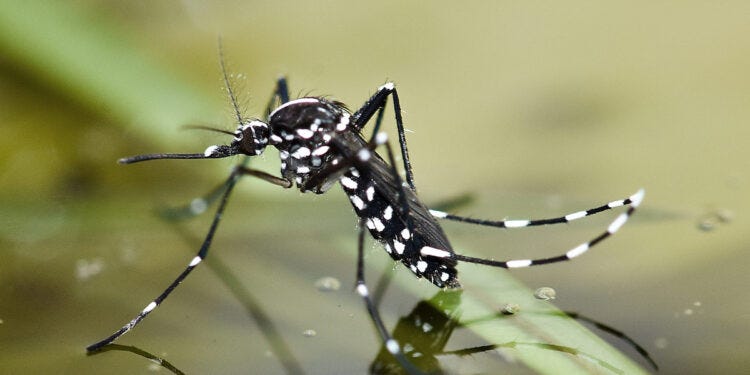
The claim of endemic dengue fever is perhaps the most egregious element of the HECC report, given that it is tied directly to rising human-caused greenhouse gas emissions. The culprit is the Asian tiger mosquito, which was confined to its tropical forest base during the last ice age but has been moving northwards throughout the current interglacial period. As larger areas have opened up for colonisation, the mosquito has become more tolerant of lower temperatures and – in common with many invasive species – has thrived as human mobility has increased. Through shipping and trade, the Asian tiger mosquito has already established itself across much of Europe. There have been reports of mild dengue fever cases in several European countries, but fatality rates are at or near zero.

