

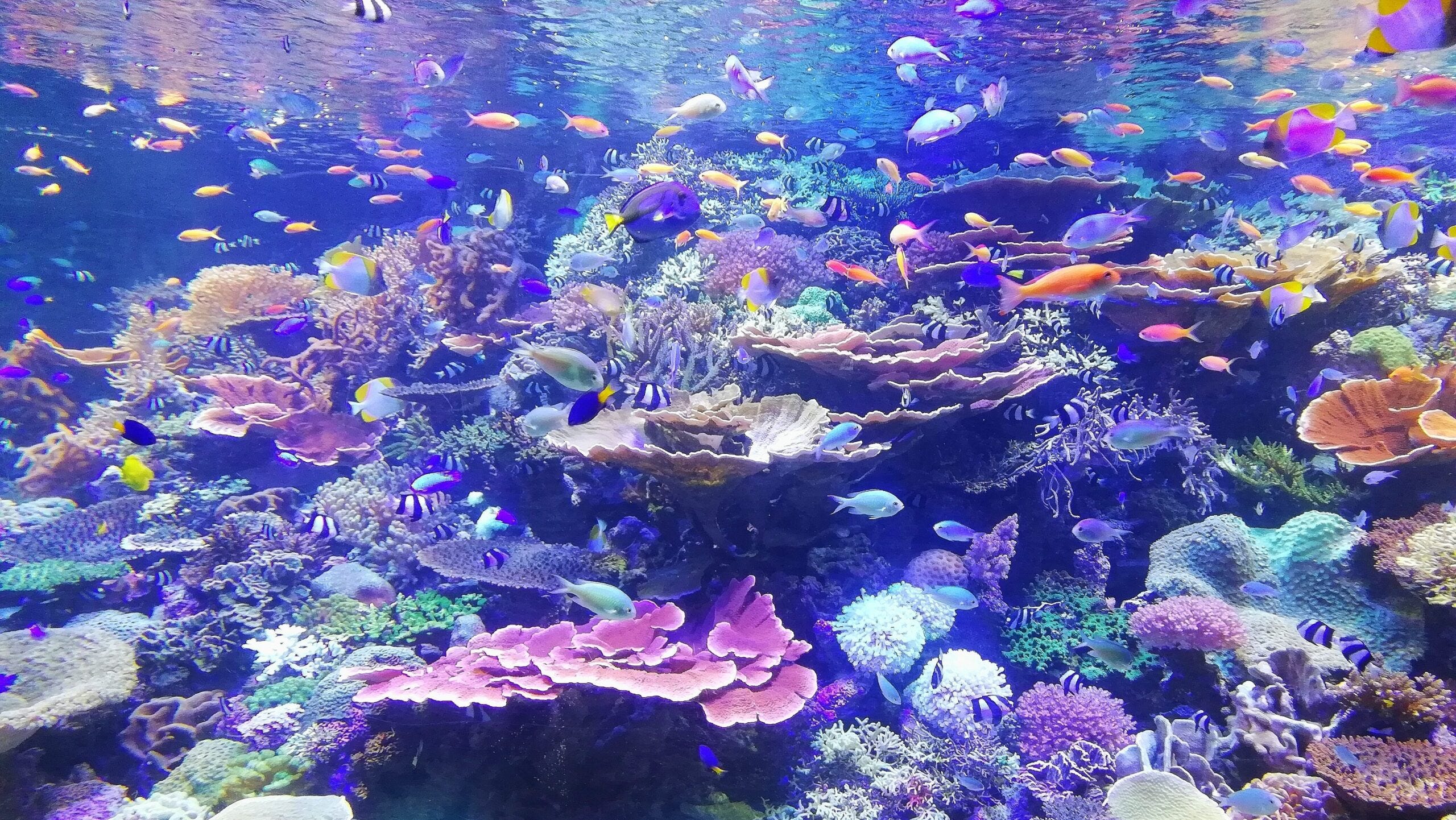
It might be wondered why climate catastrophising clots bother with coral and in particular the Great Barrier Reef (GBR). For years as GBR coral cover hit new record highs, it let them down all the time. A bout of temporary natural ‘bleaching’ in 2024 gave a little Armageddon hope with the Guardian reporting last year that GBR coral may reach a “tipping point” where it cannot recover fast enough between “major catastrophic events”. But it’s back to disappointment this year with the Australian Institute of Marine Science (AIMS) observing in its latest 2025–26 report that hard coral cover remained stable or increased across much of the GBR, “demonstrating the capacity of many reefs to withstand and recover from disturbances when stress is limited and conditions are favourable”.
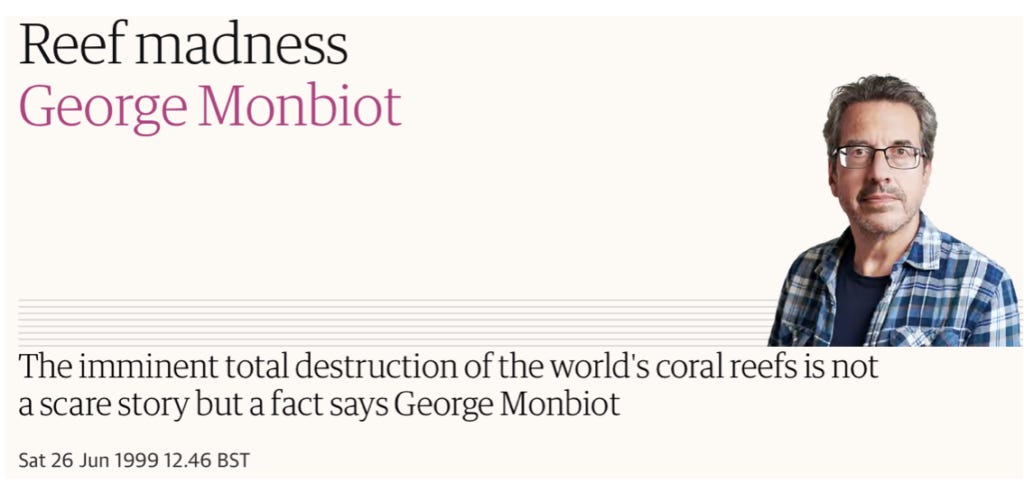
It’s called Nature. Who knew that corals that have been around for hundreds of millions of years can survive slight changes in water temperature, surface storms and attack from other creatures in the sea. Apparently not King Klot himself, George Monbiot of the Guardian, who told us in June 1999 that: “The imminent total destruction of the world’s coral reefs is not a scare story but a fact”.
The dramatic bleaching that has always affected coral is a classic ‘look out of the window’ trope. These days it seems to be the only argument left for Net Zero promoting fanatics to explain natural events, weather and complex atmospheric science. It is of course anti-scientific junk, easily debunked, and reliant for its effect on emotional, gullible and politically motivated messengers. It is the poster explanation for the ‘post-truth’ world of settled climate science. Who cares about understanding detailed science about underwater coral, when children and adults need scaring about upcoming ecological collapse. Carry on munching meat and flying to Fuengirola and the polar bears, bees, penguins, moths, coral get it (all other soon-to-be-extinct species are available if required).
It doesn’t help when the scientists clamber on board the Net Zero gravy train. Last year, Dr Mike Emslie, who leads long-term reef monitoring at AIMS, told the Guardian that: “It has been a pretty sobering year of surveys with the biggest impacts I have seen in the 30-plus years I have been doing this… This volatility is very likely a sign of an unstable system”. Who knows what depths of despair the estimable Emslie would have plunged if he was not commenting on 2024–25 figures that showed coral was at its fourth highest level since detailed observations began in the 1980s.

