

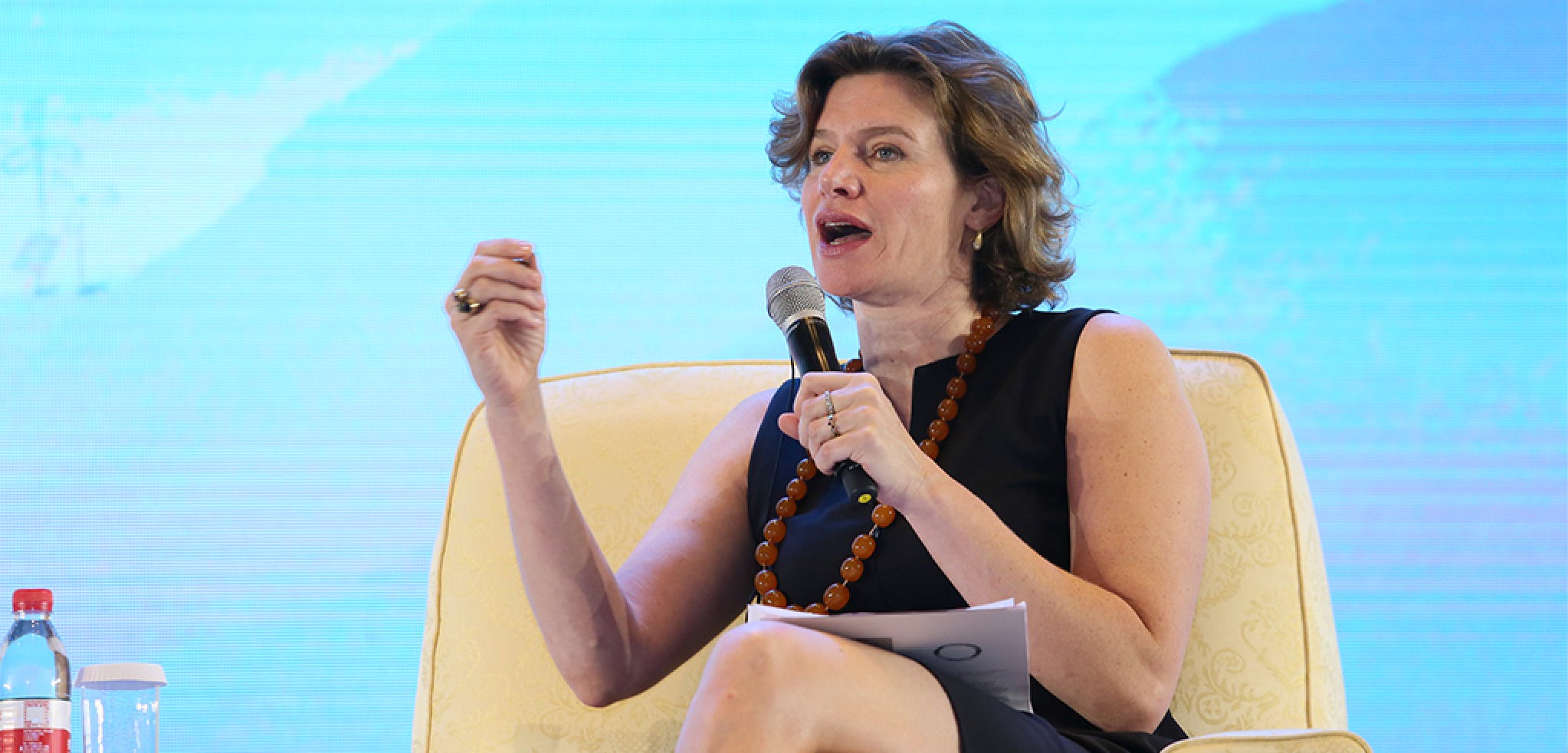
A Review of the The Common Good Economy: A New Compass by Mariana Mazzucato (Allen Lane, 2026, pp.352)
Mariana Mazzucato has made a career out of telling governments what they already want to hear – that they are not merely the fixers of last resort but the architects of prosperity itself. With The Common Good Economy, her latest offering from Allen Lane, the UCL economist and policy entrepreneur has taken this flattering message to its logical conclusion.
If her previous books, the Entrepreneurial State (2013) and Mission Economy (2021), argued that the state deserves more credit for innovation and more latitude in directing investment, The Common Good Economy goes further. It argues that the very purpose of economic life must be reoriented around a collective moral vision, curated and administered by enlightened institutions operating according to principles of “directionality”, “co-creation”, “participation” and “reciprocity”. The book is long, earnest, and rich with the vocabulary of progressive policy circles. It is also, at its philosophical core, a work of considerable intellectual presumption.
The book’s central conceit – stated with disarming confidence on page 3 – is that modern economics has been trapped in a narrow, individualistic framework ever since Adam Smith published The Wealth of Nations in 1776 and that this framework “lacks a coherent theory of the common good”. This framing, Mazzucato asserts, is not just incomplete but morally deficient – a catastrophic narrowing that has robbed economic governance of purpose, direction and solidarity.
The implication, barely concealed throughout, is that the classical liberal tradition from Smith to Hayek and Friedman is in essence a prolonged evasion of humanity’s deepest social obligations. It takes Professor Mazzucato – drawing on potted summaries of Aristotle, Cicero, Aquinas, “indigenous knowledge” traditions and the biology of ecosystems – to finally see what they could not.
This is, to put it plainly, a remarkably self-confident claim. And it deserves a sustained examination.
