

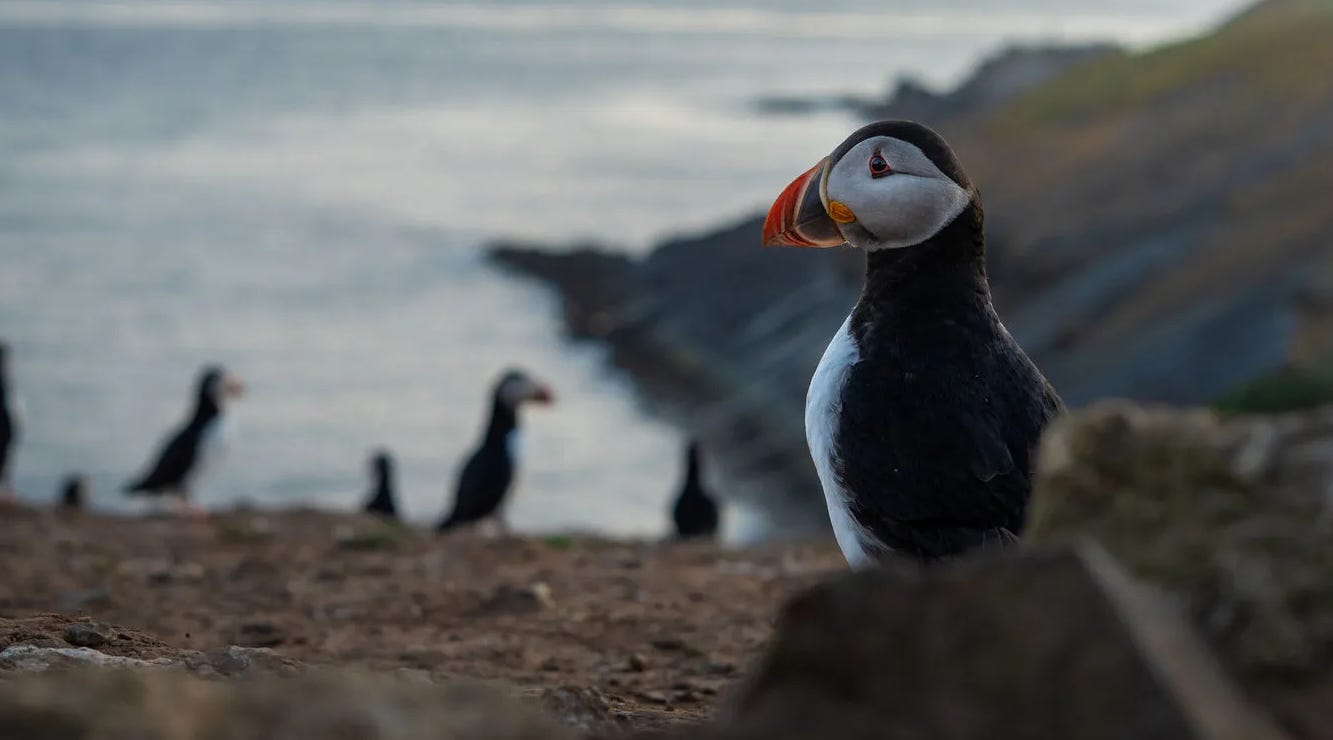
Every year we are fed the same scare story about Britain’s Atlantic Puffins all disappearing in the near future.
This time, the Daily Telegraph has fallen for it, reporting:
Puffins could almost disappear from the British Isles in the next 25 years, new research has warned.
Numbers of the seabird have fallen in recent years, leading to the species being declared vulnerable to global extinction.
Climate change, overfishing, invasive species, pollution and habitat loss are among the causes that have threatened their existence.
Research from the British Trust for Ornithology (BTO) has warned of a possible 90% crash in the puffin population of the British Isles by 2050, amid a battle to reverse the species’ “catastrophic decline”.
The BTO said: “One of the greatest concerns for BTO scientists is the decline in sand eels, which are a major food source for many adult, and especially young, seabirds. Overfishing and changes in climate are significant drivers in the loss of the sand eels.
“An increase in extreme winter storms, exacerbated by climate change, has also resulted in high mortality of puffins and other seabirds.
The Atlantic puffin is one of 10 seabird species predicted to suffer long-term effects on their populations as a result of climate change, as warming air and sea temperatures reduce food availability and drive extreme weather events.
Recent declines have been linked to increasingly frequent marine heatwaves and intense storms, which led to thousands perishing at sea last winter.
As often with these silly scare stories, the reverse is true.
One of Britain’s biggest puffin colonies is on Skomer Island, just off the Pembrokeshire coast. The Wildlife Trust of South and West Wales has been conducting population counts there every spring since 2004.
Their surveys have shown a steady increase in puffin numbers in recent years. This year a record number of 52,019 puffins were counted. Back in the 1990s numbers rarely exceeded 10,000:

