

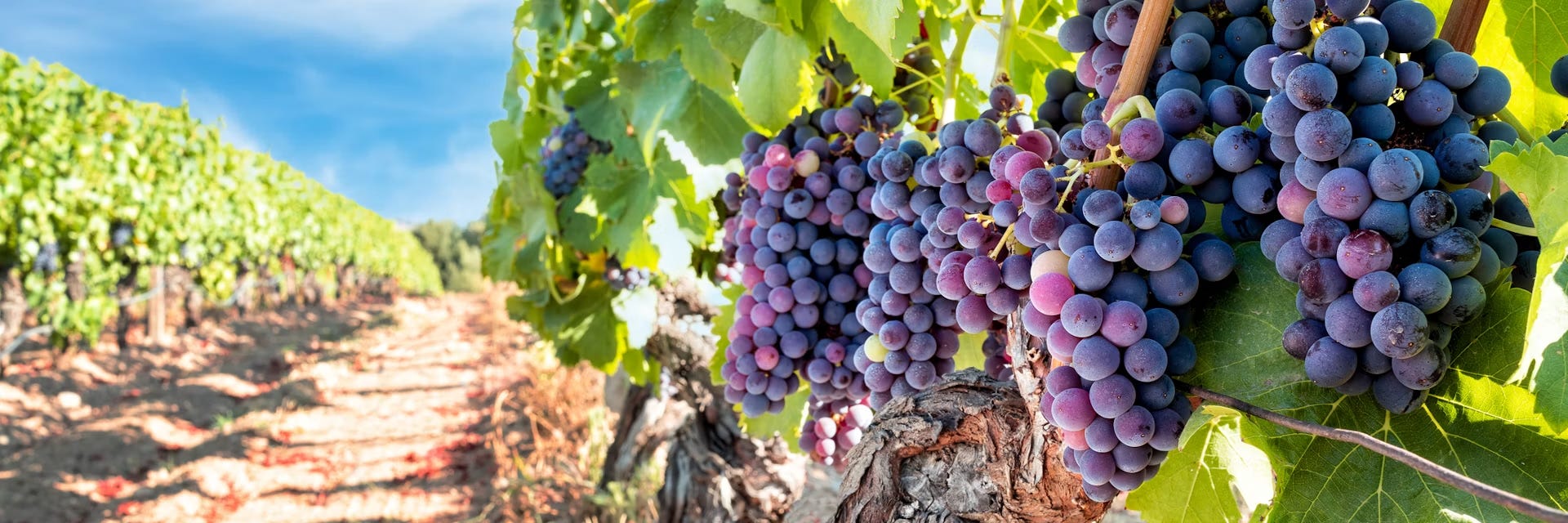
It has become one of the settled rituals of the climate-activist press: almost any hardship afflicting any agricultural sector, anywhere in the world, is now reflexively laid at the door of “climate change”. No mention of ordinary weather variability, market economics, pests or poor planning. The latest instalment arrived via the Conversation, under a headline declaring that climate change is putting the squeeze on the world’s grape-growers, dressed up as fresh research. It was duly amplified across social media as further proof that the planet’s vineyards are dying on the vine. This should be duly mocked by those weary of seeing every inconvenience – from frost and floods to a merely disappointing harvest – blamed on “climate change”. The truth, as usual, lies in the data – and the data on grape and wine production tell a rather different story from the one being sold to a public primed to expect climate catastrophe in every news cycle.
A narrower study than the headline admits
Read past the headline and the underlying research turns out to be considerably narrower than the framing suggests. The paper behind the Conversation piece is a modelling exercise by Australian researchers projecting how warming and drying trends could, over coming decades, alter the suitability of Australia’s wine regions for viticulture. It is a study of possible future risk – among many future risks – in one country. It is not a documented account of a global industry currently in decline, though it comes across as such.
Even the article’s own examples cut against the doom framing: it notes that warming has allowed English growers to expand sparkling wine production in areas once thought unsuitable for anything but hedgerows, and that Tasmania stands to benefit as conditions there become more favourable. An industry that is simultaneously said to be collapsing in one hemisphere and blossoming in another is not evidence of crisis. It is evidence of what agriculture has always done in response to a changing climate: move, adapt and substitute varietals.
What the hard production data actually show
The relevant test of an existential ‘squeeze’ on grape-growers is not a projection but the actual harvest. On that score, the figures compiled annually by the International Organisation of Vine and Wine (OIV) – the industry’s own statistical authority – are unambiguous. World fresh grape production has been on a broadly rising trend since the 1990s and stood at roughly 77.7 million tonnes in 2024, according to the OIV’s 2024 statistical brief – a level that has essentially held or grown even as the area under vine has shrunk, reflecting steady gains in yields and viticultural technique rather than any climate-driven contraction.
Production has shifted geographically, away from a shrinking European vineyard area and toward China, the Americas and other emerging producers, as documented in the OIV’s historical releases. The geographic reshuffling is driven substantially by economics and land-use policy and is not the same thing as a climate-induced collapse in supply. The Climate Realism project at the Watts Up With That? website reached a similar conclusion when it dug into UN Food and Agriculture Organization data in response to Canadian media claims of a climate-driven wine crisis: both grape and wine output have risen sharply worldwide since 1990, during the very period of modest global warming that is supposedly squeezing growers out of business.

