

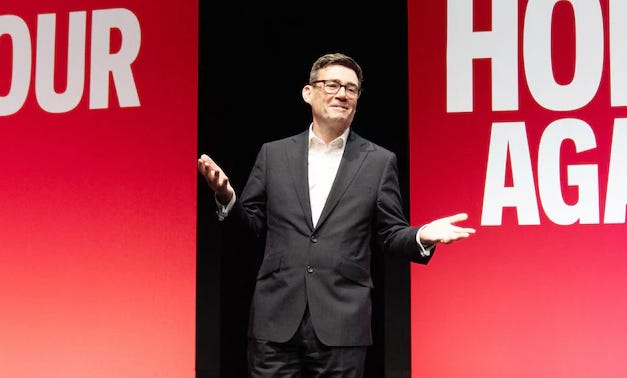
Following Prime Minister Andy Burnham’s tearful, promise-laden speech at the Labour Party’s annual conference, the Government announced this week the Great British Grid (GBG). “Families and businesses across the country will benefit” as the GBG will “speed up connections and cut bills”, explained a press release from the Department for Energy Security and Net Zero. GBG comes in the wake of the creation of Great British Energy, with a mission to “accelerate clean energy” and allow “workers and communities to reap the benefits of clean, secure, homegrown energy”. But while these state-owned companies make vague promises, within hours of the announcement the Ofgem price cap for October-December kicked in, boosting bills by 4%. So how are more publicly-owned companies going to help the Government that came to power on the promise of “lower bills” deliver?
As I pointed out in a recent article here, if we ignore Ofgem’s very obvious goalpost-moving, and the Government’s gimmicky temporary refunding of subsidies from general taxation and VAT removal, energy bills have risen by £547 since Labour took power. The difference between Labour’s promises and what it has delivered is therefore nearly £900. Its defenders might argue that these policies have taken £150 and £45 off bills. But the facts remain that these interventions are temporary, only move the costs onto taxpayers (to no net benefit), and bills are still going up.
So, unlike such gimmicks, is GBG going to be able to do more than performatively fiddle at the edges? Great British Energy, for example, seems to be little more than an outfit that fulfils Miliband’s eco-social democratic wet-dream of some Green Leap Forward, in which “communities” are financed by the state via the company to “own” energy infrastructure. Back in February, it was announced that GBE had made a billion pounds available for such projects. But the devil is in the detail. Last month, Burnham revealed that just £30 million was on the table for “People’s Power projects”, with the remaining £970 million presumably waiting for interested parties.
“Every council and community group awarded funding will have at least part-ownership in its renewable energy projects,” explained the PM. “They will own a stake in them and retain a share of the wealth they create,” which will “put money back in people’s pockets while giving them a direct role in tackling the climate crisis.”

