

It is always a surprise to me to hear reports of “bullying” at the BBC. Not because I am surprised that there is “bullying” at the BBC, but that I am surprised that anyone is surprised by it, such that they think it worthy of reporting. Neither am I particularly moved by the concept of ‘bullying’ in such an institution. After all, it is a large, state-owned, Establishment-oriented corporation, whose very existence is owed to the Establishment’s need to control culture and the ‘information space’. And where would the British Establishment be, were it not for institutions, from the public boarding school through to the Army, through Oxbridge, the Civil Service and Parliament itself? What are they, if not formally and informally institutionalised ‘bullying’?
We are, after all, still in a moment characterised by confusion about ‘what is a woman?’, one that apparently required an institutional process – the intervention of the Supreme Court – to establish a fact such that the fact could begin to prevail through the institutions. For a time, it was considered an act of ‘bullying’ to claim that sex was a fact established by chromosomes, and that consequently those who asserted such a claim were worthy of actions that would otherwise constitute ‘bullying’: termination of employment, cancellation, loss of status and so on. And so we must be equally clear about the term ‘bullying’.
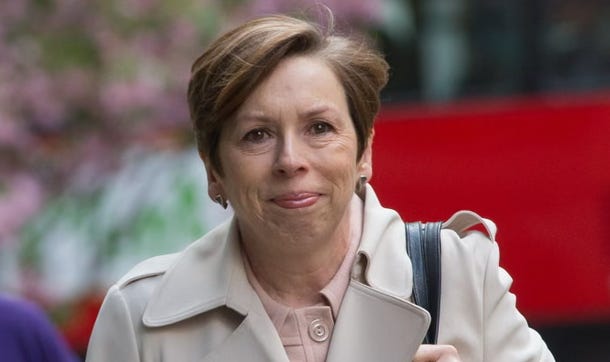
In a long article in UnHerd, former head of political programmes at the BBC Rob Burley discusses the broadcaster’s “commitment to impartiality undermined by transgender ideology, a blind commitment to diversity and inclusion schemes, and a culture of intolerance”. A large part of this discussion involves an interview with former director of BBC News Fran Unsworth, who left her post four years ago. “She’s still raw from the experience of doing something she loved in an environment she began to hate,” explains Burley. “It was bullying,” says Unsworth. “There was lots and lots of bullying going on about all sorts of things: people didn’t want to hear from certain points of view; they’d ‘no platform’ them; all that safe-spaces shit.”
I would have liked to have seen a full enumeration of these verboten “certain points of view” which were “no-platformed”. But the discussion is limited to the dominance of transgender activism and immediately adjacent ideologies, which Unsworth seems to suggest ultimately led to her departure. I do not think I am alone in having found the BBC’s output simply nauseatingly drenched in ideology before even her tenure as director. And having been a nearly full-time consumer of the BBC since reaching double figures, I switched it off and cancelled my TV licence. This decision wasn’t just about the BBC’s attachment to green politics. Nor Brexit. Nor immigration. Nor Trump. Nor gender and racial ideologies, or its historical revisionism. It was that the BBC seemed to adopt an editorial policy of bullying, not merely those with “certain points of view”, but the audience itself, and not just in current affairs and news, but across all branches of its output, from drama and entertainment even to sport.

