

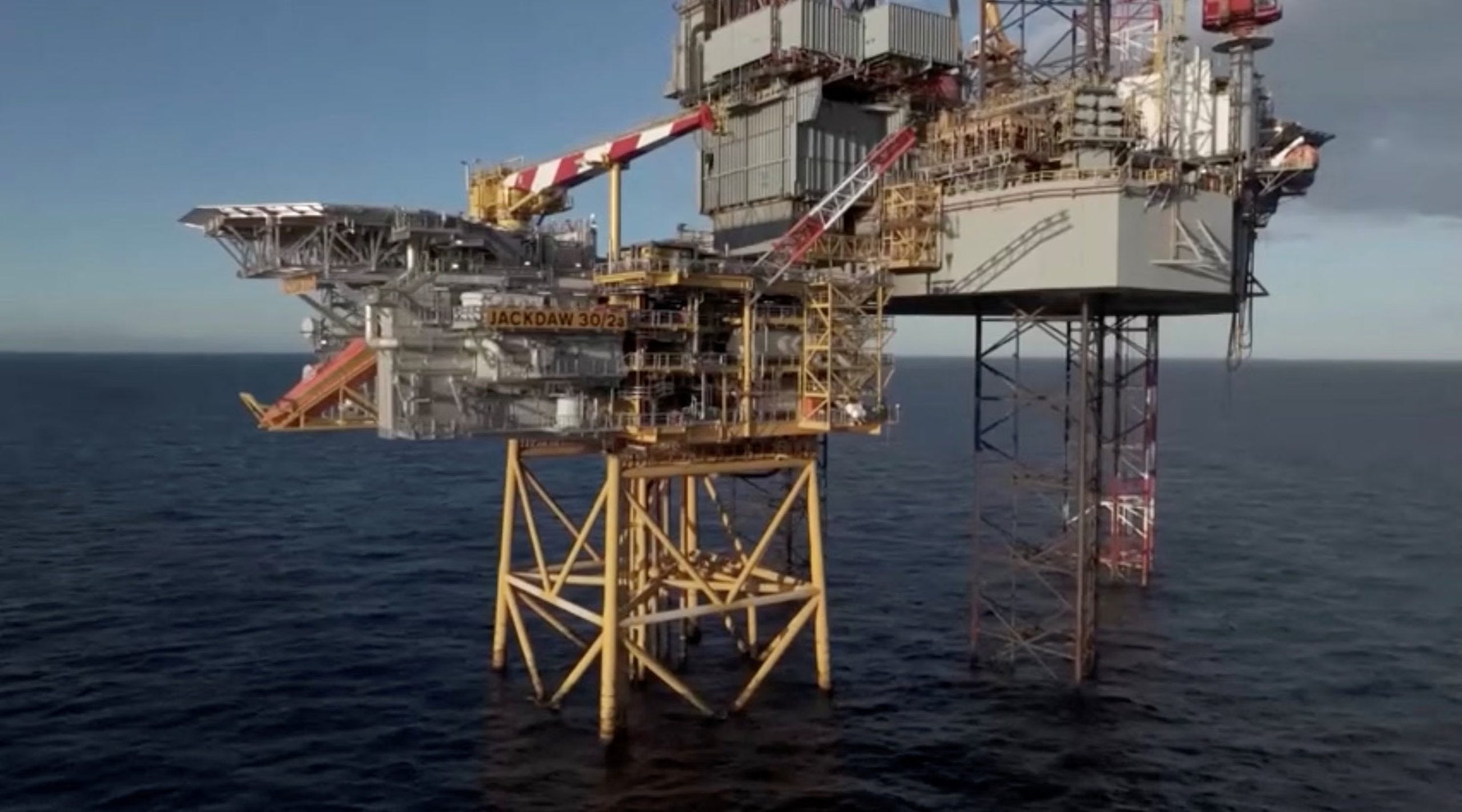
One of the most curious responses to the ongoing controversy around North Sea oil and gas is that permission for developments should not be granted because the wells are drying up. I’ve long argued that the authors of green arguments owe little to their maths teachers, but any sense of logic or proportion is often conspicuously absent. After a great deal of delay, the Jackdaw field has finally been given consent by the Government, though the Rosebank field looks set to be denied. This has increased the volume of chatter from green quarters, the angry flurrying of which further exposes its departure from reality.
Ahead of the Government’s Jackdaw decision, it was the Guardian that claimed that “Heat pumps and insulation would cut UK living costs more than new oilfields, study suggests.” The ‘study’, however, seemed to be merely a blog post published on the website of the influential green think tank E3G a week earlier. Rather than presenting any new research, the post collected some anti-North Sea development talking points, most of which were themselves scraped from other green blob-funded fake civil society organisations.
“North Sea revenues are declining dramatically,” claims E3G. In support of this claim, it produces the following alarming chart, which does indeed look volatile. It shows a precipitous decline in revenues at the start of the preceding decade, spiking again during the post-lockdown era, followed by a projection back to zero. “New licences cannot restore these revenues,” it asserts.
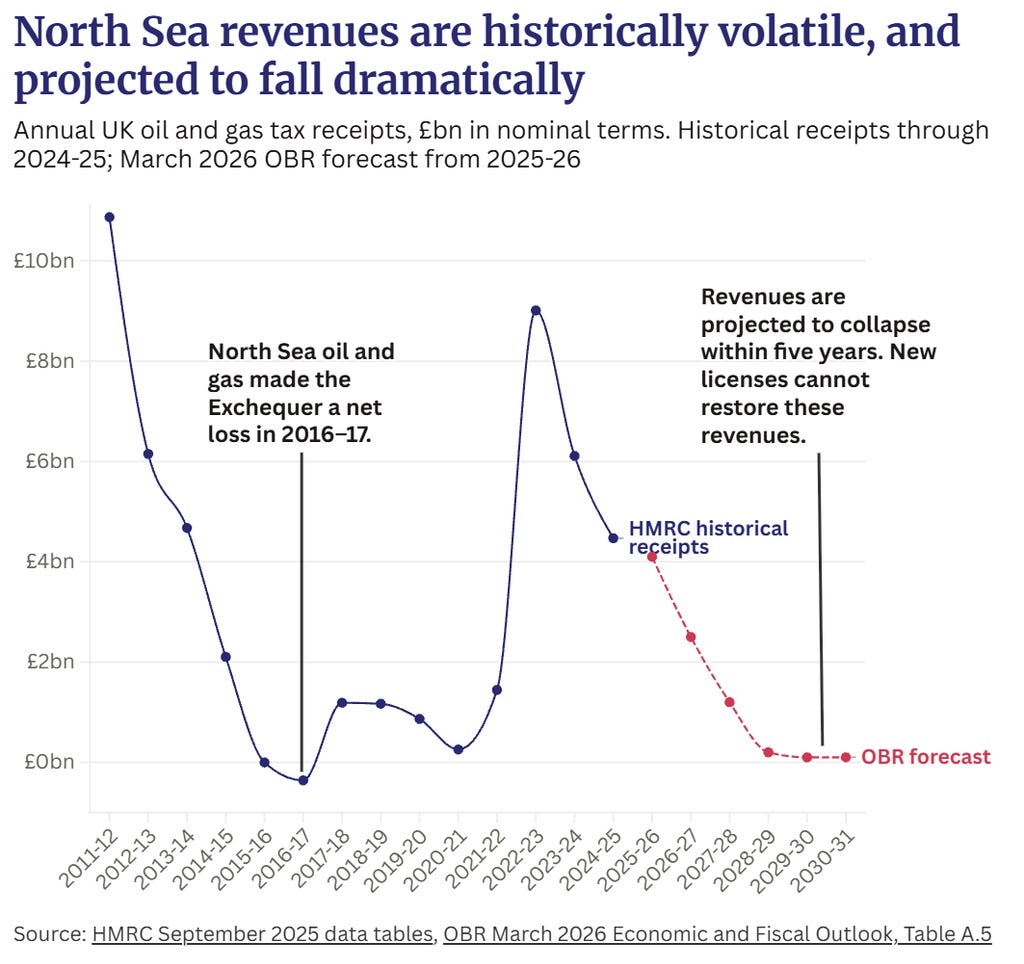
But E3G’s chart is misleading. Yes, revenues are volatile. But the causes of this volatility and its tendency towards zero are not direct representations of geological reality. This is shown by a chart of the same data on an axis that spans the history of North Sea oil and gas.

