

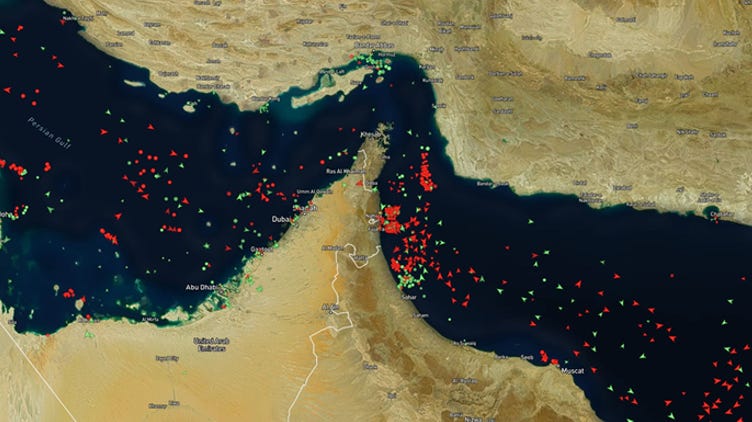
The Strait of Hormuz is barely 21 miles wide at its narrowest point. Yet this narrow maritime corridor carries one of the greatest concentrations of economic risk on the planet. When tensions flare in the Persian Gulf, the reverberations travel far beyond the Middle East. They are felt in Mumbai, Tokyo, Seoul, Bangkok and Manila — and ultimately across the entire global economy.
The reason is simple. Roughly one fifth of the world’s oil consumption and a similar share of global LNG trade passes through the Strait of Hormuz, making it the most critical energy marine chokepoint on Earth.
The consequences of that vulnerability are now playing out in real time. As conflict and disruption threaten shipping through the Gulf, Asian Governments are scrambling to conserve fuel, release strategic reserves and secure alternative supplies.
The spectacle is a striking reminder of an inconvenient truth. Despite decades of political rhetoric about an imminent ‘energy transition’ to ‘Net Zero by 2050’, the modern global economy remains heavily dependent on oil and gas. Much of that supply still flows through a single narrow passage between Iran and Oman.

