

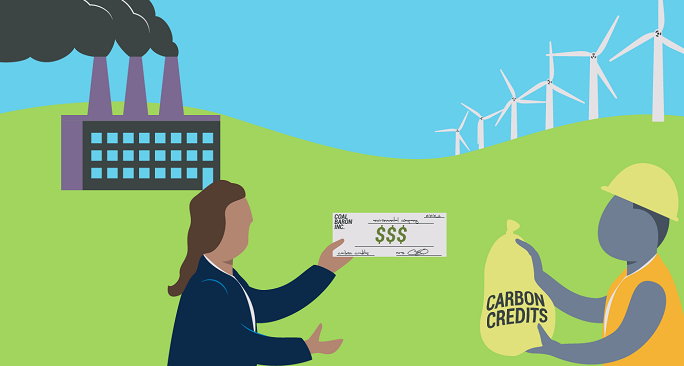
On Thursday, the UN Framework Convention on Climate Change (UNFCCC) Article 6.4 Supervisory Body approved the first batch of carbon credits under the Paris Agreement Crediting Mechanism. The project? A South Korean-backed clean-cooking initiative in Myanmar, issuing some 60,000 tonnes of CO₂-equivalent emission reductions from efficient cookstoves. Some in the climate commentariat celebrated a “major milestone” in the UN’s Paris Agreement.
UNFCCC Executive Secretary Simon Stiell hailed it as proof that markets can deliver “real-life benefits”:
Over two billion people globally are without access to clean cooking, which kills millions every year. Clean cooking protects health, saves forests, cuts emissions and helps empower women and girls, who are typically hardest hit by household air pollution… [the new mechanism] can support solutions that make a big difference in people’s daily lives, as well as channelling finance to where it delivers real-life benefits on the ground.
Paris not much better than Kyoto
Given the appalling living conditions of people in very poor developing countries such as Myanmar, most if not all more fortunate observers among us would very much wish that the UNFCCC can “channel” finance to deliver “real-life benefits on the ground”. Article 6.4 is the direct descendant of the Kyoto Protocol’s Clean Development Mechanism (CDM) and its supervisory body is tasked to promote a global carbon market.
The CDM was a United Nations-run carbon offset scheme under the Kyoto Protocol allowing countries to fund greenhouse gas emissions-reducing projects in other countries and claim the saved emissions as part of their own efforts to meet international emissions targets. The CDM, defined in Article 12 of the Protocol, was intended to assist predominantly developing nations achieve “sustainable development” and reduce their carbon footprints, while assisting industrialised nations to achieve compliance more cheaply. The CDM logic under the Kyoto Protocol was rooted in basic environmental economics: equalising marginal abatement costs across industrial sectors and countries to achieve any given level of global emission reductions at the lowest possible total cost.

