

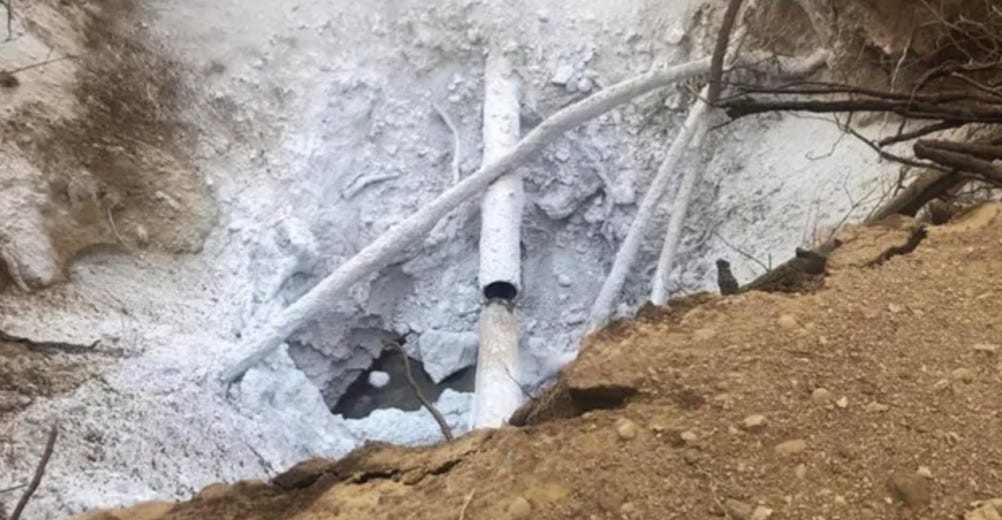
On April 3rd 2024, a carbon dioxide pipeline ruptured at the Lake Charles Pump Station in southwest Louisiana. Over the next two hours, a plume of dense white vapour spread across the surrounding rural area. Local road blocks were put in place by emergency services, but thankfully no human casualties were reported. The release was relatively small at 300 tonnes, compared to a more serious 6,000 tonnes leak in Missouri in 2020, and windy conditions stopped the cloud falling to the ground. In areas with any human or animal habitation, large sudden releases are potentially fatal since heavier-than-air CO2 can drop like a stone, drive out oxygen and asphyxiate anyone beneath. One line of enquiry, common when such incidents occur, was that the rupture was caused by the formation of carbonic acid. This is a major problem in CO2 pipelines since the acid can form with trace amounts of water – as little as 100 parts per million. Just one further hazard to consider as the hard-Left Miliband lunatics press ahead with billion-pound plans to run hundreds of miles of near-surface, large-diameter pipes around the north of England to bury CO2 in quantities that will have no measurable effect on any change in the climate.
But of course that is not really the point. Around £22 billion is planned to be spent in the UK on the potentially dangerous attempt to capture CO2 and bury it in likely compromised former gas fields under the sea. Like equally useless wind power, the subsidy-spraying will ensure plenty of returns for state-coddled profiteers, while wealth-destroying, joke green jobs can be claimed to be created.
On Monday, the Daily Sceptic reported on plans to build a 120-mile pipeline from cement and lime works in Staffordshire to Morecombe Bay via Cheshire and the Wirral. The pipe, known as Peak Cluster, will run close to a number of towns and villages including Macclesfield, Ellesmere Port and Willaston. In the North-East, it is planned to run a near 60-mile Humber pipeline through a number of urban or semi-urban areas including Goole, Howden, Scunthorpe, Barton-upon-Humber, Brigg, Immingham, South Killingholme and Hedon. The pipe will cross the estuary and run close to Hull’s eastern and southern fringes and associated industrial zones.
Carbon capture is not a new technology and the Americans have a great deal of experience in running it since CO2 is often injected into wells to enhance the removal of oil and gas deposits. Moving CO2 around in large pipes needs handling with great care, and the overall safety record does not inspire complete confidence. According to the US Pipeline and Hazardous Materials Safety Administration (PHMSA) database to 2021, corrosion, including both internal and external, arising from carbonic acid formation was one of the main causes of onshore CO2 incidents. Corrosion due to the carbonic acid accounted for a notable proportion of CO2 accidents, with material failure and weld issues being other leading causes.

