

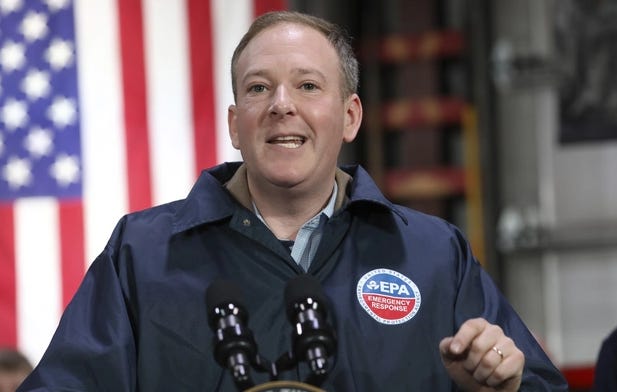
Energy Secretary Chris Wright and Interior Secretary Doug Burgum at a G20 ministerial meeting on energy abundance and signed what may be the single most consequential act of environmental deregulation in American history. The final rule, formally the “Partial Repeal of the Carbon Pollution Standards for Fossil Fuel-Fired Electric Generating Units”, eviscerates the Biden administration’s 2024 mandate requiring coal- and gas-fired power plants to capture 90% of their carbon dioxide emissions or shut their doors. A companion proposal goes further still, moving to rescind the EPA’s underlying claim to authority to regulate greenhouse gases from power plants under the Clean Air Act altogether. It is an attempt not merely to repeal a rule but to permanently dismantle the legal scaffolding beneath the entire punitive regulatory edifice inspired by the Church of Climate.
The reaction from the climate establishment was as predictable as it was shrill. The green rag Guardian announced that Trump’s EPA had stripped itself of regulating ability, gutting the Clean Air Act in “a gift to planet polluters”. Environmental groups vowed immediate litigation, and the Clean Air Task Force branded the repeal unlawful. Sceptics will recognise the pattern by now: any retreat from Net Zero orthodoxy is met not with argument but with moral panic dressed up as science.
Undoing a fraudulent finding
To understand why Monday’s action matters so much, one has to trace the regulatory lineage back nearly two decades. In 2007, the US Supreme Court in Massachusetts v EPA ruled that greenhouse gases could, in principle, be treated as air pollutants under the Clean Air Act. The Obama EPA seized on that narrow opening in 2009 to issue what became known as the Endangerment Finding, the proposition that greenhouse gas emissions from new motor vehicles endanger public health and welfare. That single administrative finding, resting on computer models rather than observed harm, became the legal mechanism through which the entire American climate-regulatory apparatus was subsequently built: vehicle mileage mandates, methane restrictions on oil and gas wells, and, in 2024, the power-plant carbon-capture rule that is now being repealed.
Zeldin’s EPA had already struck at that foundation earlier this year, when it finalised the rescission of the 2009 Endangerment Finding itself in February, arguing that the agency lacks statutory authority under Section 202(a) of the Clean Air Act to regulate emissions on the basis of an imagined ‘climate crisis’ rather than demonstrable local harm. Power plants, the second-largest source of America’s greenhouse gas emissions after transportation, were always the next logical target. The courts’ “major questions doctrine“, which holds that agencies need clear congressional authorisation before regulating matters of major economic significance, cuts sharply against the sweeping powers the Obama and Biden EPAs assumed for themselves.

