

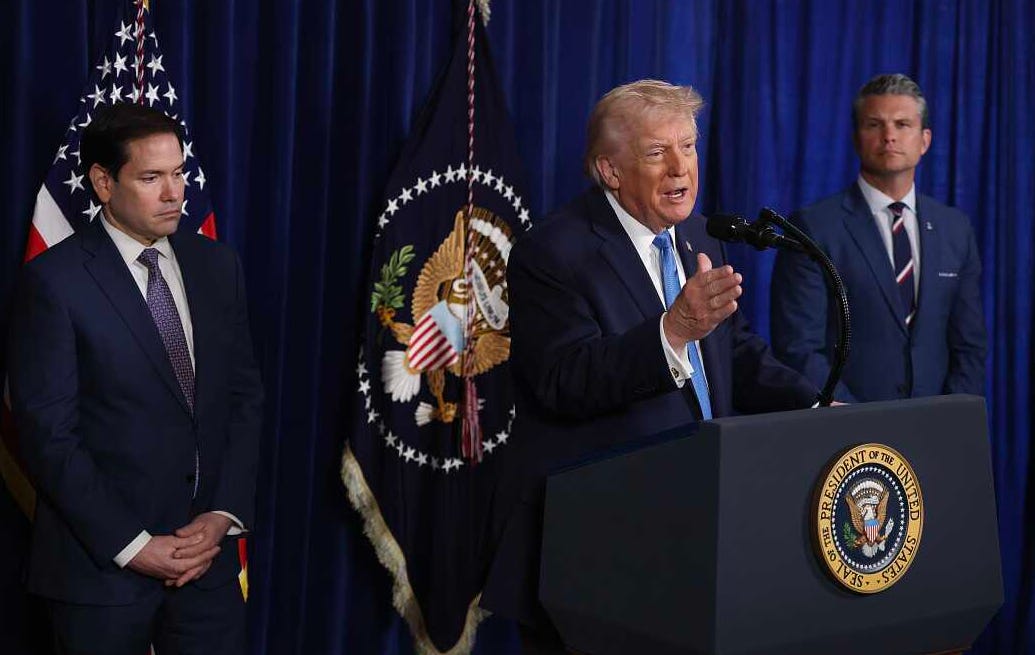
In the pre-dawn hours of January 3rd 2026, US special forces executed an audacious raid on Venezuelan military installations, capturing President Nicolás Maduro and his wife, Cilia Flores, and whisking them aboard the USS Iwo Jima for trial in New York on narcotics-terrorism charges. This swift operation, detailed in President Trump’s subsequent press conference, was no mere act of retribution against a narco-state regime. It marked the bold application of what the administration calls the “Trump Corollary” to the Monroe Doctrine, a policy pivot outlined in the November 2025 National Security Strategy (NSS).
Trump’s removal and capture of Nicolás Maduro and the de facto US takeover of Venezuela’s oil future mark a decisive reordering of the global petroleum chessboard, tilting power toward non‑OPEC producers in the Americas and sharply curbing the room China and Russia once had to use Venezuela as a strategic beachhead in the Western Hemisphere. This is not only a regime change; it is an energy‑security doctrine in action, with the Monroe Doctrine now explicitly applied to pipelines, refineries and heavy‑oil upgraders as much as to naval squadrons and missile bases.
From open door to expropriation
For a century, Venezuela’s ascent as an oil power was inseparable from US capital, technology and markets. By the late 1920s, American majors such as Standard Oil (the ancestor of ExxonMobil) and Gulf had turned what was once an agricultural exporter into one of the world’s leading crude suppliers, with over a hundred foreign oil companies operating in the country by 1929. The 1943 Hydrocarbons Law, which introduced a 50‑50 profit split, was emblematic of a broadly cooperative investment environment that relied on foreign capital investment, foreign engineering talent and US refineries on the Gulf Coast.
Nationalisation in 1976 created PDVSA, the national oil company, but did not initially sever these ties. PDVSA’s technocratic leadership ran the company as a quasi‑independent commercial entity, continued joint ventures and preserved high operating standards, which underpinned production of well over three million barrels per day during the late 1980s and 1990s. The deeper rupture came with Hugo Chávez’s politicisation of PDVSA. Mass firings of experienced engineers after the 2002-03 strike, punitive fiscal changes and expropriations drove out firms such as ExxonMobil and ConocoPhillips and triggered a slow‑motion collapse of investment, productivity and institutional competence.

