

This is the 10th in a series of 13 articles challenging climate change orthodoxy commissioned by Professor Gwythian Prins. We will be publishing the articles at a rate of one a week (read the first article here, the second here, the third here, the fourth here, the fifth here, the sixth here, the seventh here, the eighth here and the ninth here). The hope is that they can be collected into a book for Sixth Formers and university students.
Throughout history, successful engineering projects are the legacy to us of the age in which they were carried out. We thank unknown engineers for the pyramids and the remains of ancient Athens and Rome. We thank Brunel for our railways, tunnels and bridges. Whether we like him or not, we thank Elon Musk, so far, for PayPal, cheaper access to space and electric vehicles.
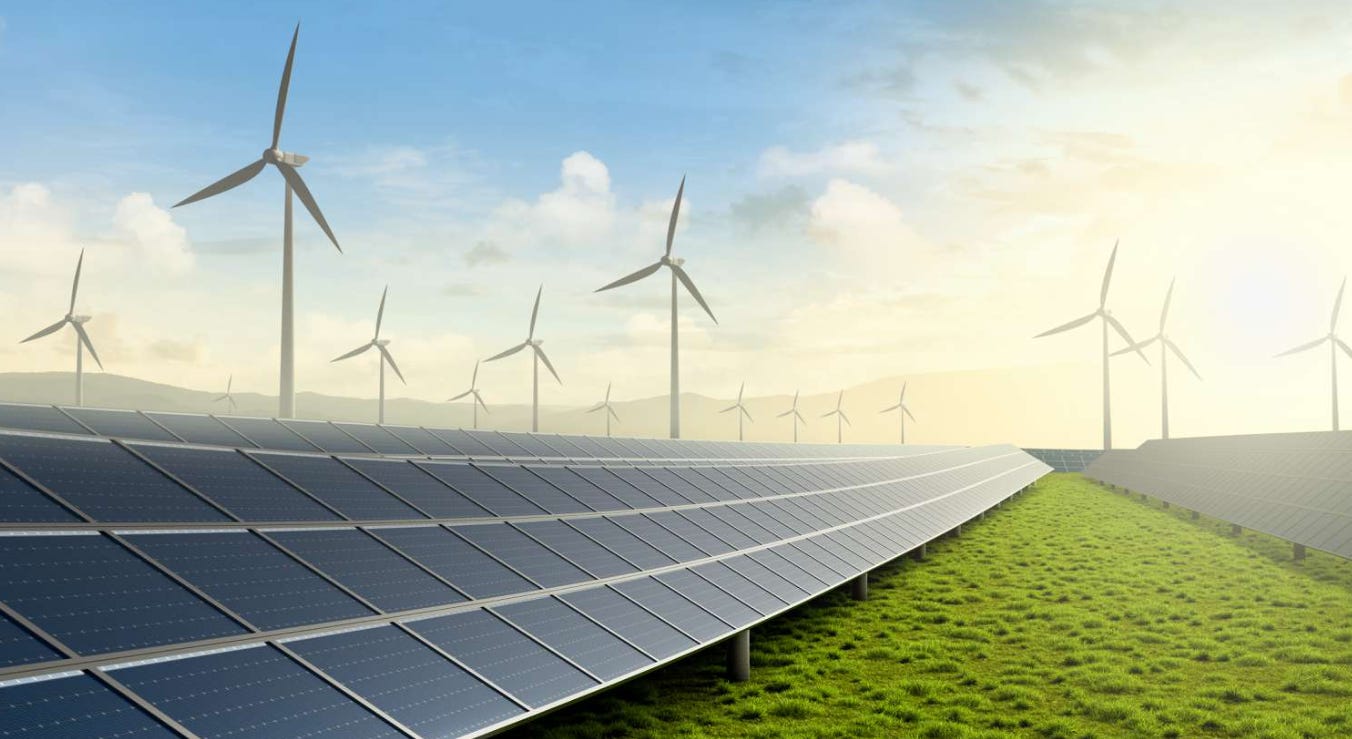
Who will we thank for the green nirvana? The windmills of today are modern versions of those that powered industry several centuries ago. Within a few decades of the introduction of James Watt’s steam engine to assist the annual harvest in Europe, those old windmills ceased turning, for here was a new, flexible, portable and always ready-to-go form of energy. Nothing that has happened in recent decades has reduced that difference in utility. The laws of physics prevent it. We have become used to accessing energy when and where we want it. In the absence – now or in prospect – of any technology to store electricity at a massive scale for weeks, we need a 100% back-up capability of coal, oil, gas and nuclear electricity for when the wind does not blow and the sun does not shine.
A forced priority to use wind and solar, sweetened by vast subsides (for they would not be spontaneously adopted by the free market) means that we have to run two grids side by side: one intermittent, the other firm. The last 20 years have seen only wasteful addition and some unwise subtractions, such as blowing up coal-fired power stations for show. We would not have been able to evolve our modern society if we had relied all along on wind and solar forms of energy. Just as we can’t buck the market because it bites back, so too we can’t buck the engineering principles of power generation for they too bite back.
Remove hot-turning inertia from an electricity grid and it is rendered increasingly fragile and vulnerable to blackout because it loses the ability to ‘ride through’ hiccups and bumps that always happen as generators go off-line unexpectedly. How often do we have to re-learn this lesson? Perhaps the Great Iberian Blackout of April 2025 will be when the penny drops? There is a double irony. A grid overweight in zero-inertia and non-dispatchable generators (sun and wind) that has a ‘black event’ cannot initiate a ‘black start’ without naughty old fossil fuels to re-establish stability and synchronicity before they are sent back to the woodshed while luxury ‘unreliables’ are returned to their place in the sun. How pointless is that?
Look at it another way. Why is there no iconic green engineer, fêted for his or her great contributions to the way we are forced to live now? Because there is no such engineer. The green movement, epitomised by those advocating a ‘nnet zero global economy’, was conceived and is driven without any fundamental input from real-world engineers. It is in origin and present practice primarily a pseudo-religious project, based on faith; and the ardour of belief, be it incandescently fervent as it visibly is in Ed Miliband, generates not one milliwatt of power.
All practical engineering is first scoped in terms of costs, materials and human resources. Engineers remember the lessons of the Tower of Babel or of Ozymandias (“look on my works ye mighty and despair!”), and they start a project with the intention of completing it successfully on time and budget. No responsible professional engineer would start on the ‘Net Zero carbon’ project, still less to a deadline date, because even an elementary analysis shows that we do not have enough of any of the finance, materials or human resources to complete the project successfully on time and within a defined budget. While there are many engineers who work on parts of the overall Net Zero project today, there is nobody pulling all the parts together and assuming responsibility for delivering success of the whole. There is no equivalent of Sir John Armitage, who led the delivery of Heathrow Terminal 5 and the London Olympic Park on time and within budget: there is no equivalent person for the Net Zero project. Civil servants are simply no substitute.
Ironically, it is the very success of real-world engineering that has seduced many people in society into thinking that, by misplaced analogy, anything is possible, if only we demand it. If we can go to the moon, and have amazing computational power at our fingertips, surely we can have a ‘Net Zero carbon’ society in 2050? But technological developments and their applications in engineering projects have their own timescales, which are not set by fiat; and in the vital distinction made by Professor Gwythian Prins, they are “tame”, meaning “all things can be known” projects.
The production of an atomic bomb is a case in point. It took four years (not four months, or a year) of intensive development to make the bomb, and there were no known unknowns in the scientific basis of the bomb from the outset. It took a decade from President Kennedy’s challenge until man walked on the moon: again, there were no showstoppers and sustained disciplined engineering won the day. These are exceptional projects. The modern intercontinental passenger jet is but a recognisable refinement of the Boeing 707 whose prototype first barrel-rolled into history over Lake Washington in 1955 and entered passenger service on October 26th 1958. The advances in electronics have all been on the basis of doing more for less as the transistor element has shrunk in size over the last five decades. This is a completely different basis to the substitution of one source of electricity with another.
There is no triumph of the will. One cannot simply have a new energy infrastructure just because one wants it hard enough when key elements are unknown scientifically and even if, as Professor Gordon Hughes and Dr Lee Moroney have calculated, you are willing to spend £220 billion in subsidy since 2002 to fail to get the fossil-fuel-free electricity grid that you so ardently desire.
Take a core example. A Tesla car li-ion battery has an energy density of around 270 Watt Hours per Kilogramme (Wh/Kg). Batteries may double in energy intensity over the next 50 years, having increased six-fold over the last 50 years, but they will still be over a factor of 40 less than the energy density in diesel oil (12,700 Wh/kg) or liquified gas (13,600 Wh/kg) and are simply unaffordable at the scale required for a Net Zero society. This metric leaves aside the obstacles of specialised raw materials which are highly polluting to procure and to dispose of, the high embodied energy manufacturing costs and the well-documented fire-risk. All these downsides are now well known.
Without large scale batteries, we will still need oil and gas and ideally – as the Germans are now doing after the failure of the energiewende, the ‘energy change’ that didn’t change – Ultra Super Critical coal-fired power stations. These state-of-the-art plants are close to 50% thermally efficient, and are running Germany’s second electricity grid – the firm power dispatchable one – to provide back-up electricity on dunkelflaute nights. And of course, energy-dense stocks from domestic coal-mines, oil and gas wells and shale gas fields are essential: fuels which fortunately the UK still has in abundance. Since Hansen’s ‘control knob’ theory of CO2 driving atmospheric temperature remains a theory that is seemingly correct in the abstract but is unsupported in real world data, as Professor Prins explains we can prioritise national energy security as a key aspect of comprehensive national defence with no qualms about environmental damage, now that we are so proficient at filtering out particulate emissions.
In contrast, mis-named ‘renewable’ sources of energy are continually posing real risks to our electricity supply. The intermittent and highly variable supply provided on cloudy breezy days needs to be smoothed out and the dreaded dunkelflaute when there is neither sun nor wind cannot be coped with within the technological capacities of a grid dominated by ‘unreliables’. And if for luxury politico-religious reasons (as now) ‘unreliables’ are given priority to dispatch when they are working, it wreaks havoc as system blackouts due to lack of sufficient system inertia show. But lesser damage is constant. Oil, large gas and coal fired generators – still less nuclear – are not designed to ramp up and down at the whim of the weather, playing second fiddle to the ‘unreliables’ for non-commercial reasons. Constant and rapid change of demand and therefore levels of output add significantly to the wear and tear on the dispatchable power equipment, shortening its useful life and raising overall systems costs.
Furthermore, the cost of playing second fiddle still has to be amortised on reduced average demand, further driving up costs. In Europe there is direct and linear correlation in the basic costs of electricity in any country and the penetration of renewables on the local network. The new work by the Renewable Energy Foundation shows that 40% of UK electricity costs are now direct and indirect subsidies to induce operators to keep wind and solar going, and that the absolute decline in electricity consumption correlates with the rise in the subsidy burden. It is not a product of improved efficiency, as any literate undergraduate engineer familiar with Jevons’s Paradox – at least any that I have taught at Cambridge – knows or ought to know.
Where the engineering profession and the professional bodies – including the Royal Society and Royal Academy of Engineering, of both of which I am a Fellow – have really let the public down is in not raising all these elementary and unavoidable engineering problems that show no sign of being solved so far, let alone by 2050, if ever. Worse still, academia, and the academies at the top, are in dereliction of their basic ethical codes of conduct. They are staying silent as a steady stream of pointless or dangerous engineering research projects (such as geo-engineering meddling with ill-understood open climate systems) continue to be given priority by research councils, which for reasons of basic physics and engineering simply will not provide what is needed any time, let alone by 2050, but will incur significant risks.
If the £220 billion thrown at this luxury belief since 2002 has failed to produce any sign of self-sustaining take-off, there is no reason to think that it ever will. However it has and will continue to make a lot of ‘green’ (but not actually) grifters very rich at the taxpayers’ expense. Is that what taxpayers want?
The ‘green’ lobby which established the Net Zero Carbon project without due attention to engineering reality will continue to bring economic chaos to the country. When will these ideologues be held to account?
Michael Kelly FRS FREng is Emeritus Prince Philip Professor of Technology in the Department of Engineering at the University of Cambridge, and a trustee of the Global Warming Policy Foundation.